Lovable vs Bolt for SaaS MVPs: Which AI App Builder Should You Use?
Lovable vs Bolt for SaaS MVP buyers: pricing, backend, GitHub handoff, deployment, and the point where a prototype needs a real build plan.

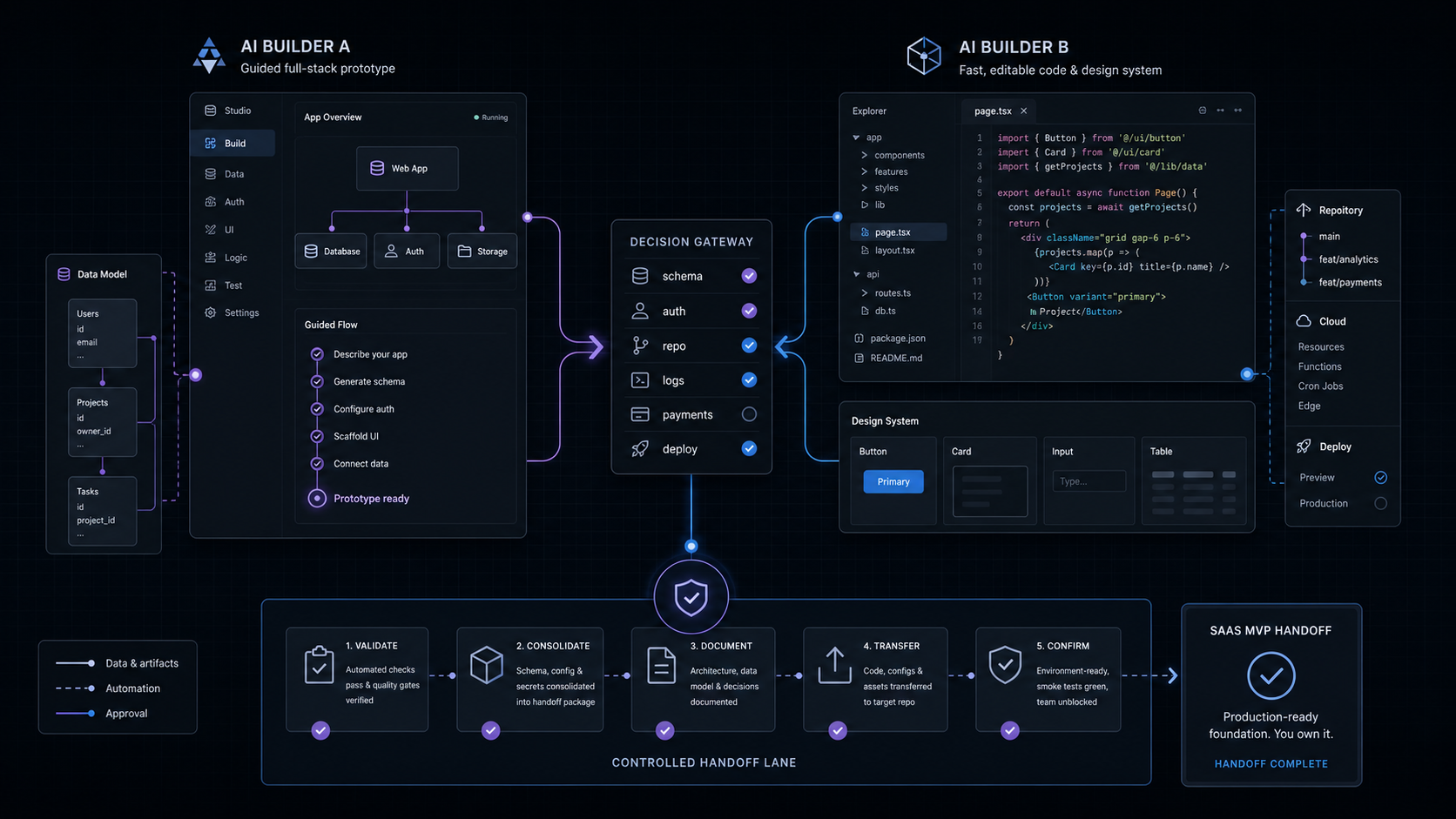
Use Lovable when the first job is a full-stack SaaS prototype with Supabase, authentication, and a founder-friendly build loop. Use Bolt when the first job is a faster editable prototype, a design-system-backed interface, or a project you expect to wire through GitHub and Bolt Cloud quickly. Neither tool is the production plan by itself: the handoff plan is the MVP.
The Short Verdict
Lovable is the safer first pick when the MVP depends on a real data model early. Bolt is the sharper first pick when you need speed, direct code edits, GitHub movement, and a prototype that can follow an existing design system.
That split matters because SaaS MVPs do not fail at the landing page. They fail at accounts, roles, billing states, permissions, webhook retries, dashboard data, and the moment a founder has to explain what was generated to the person maintaining it.


If the question is "Which one is better?" the answer is narrower: use Lovable for a founder-led Supabase MVP, use Bolt for a fast editable build loop, and use a scoped product team when the prototype has to become the system customers depend on.
For the broader fixed-scope delivery envelope, the useful companion is what an AI SaaS MVP development service should include. Tool choice is only one piece of that scope.
Pricing And Usage: Credits vs Tokens
The sticker price is similar at the entry paid tier, but the cost behavior is different. Lovable sells capacity in credits. Bolt sells capacity in tokens, and Bolt says most token usage comes from reading, understanding, and syncing project files, so larger projects use more tokens per message.


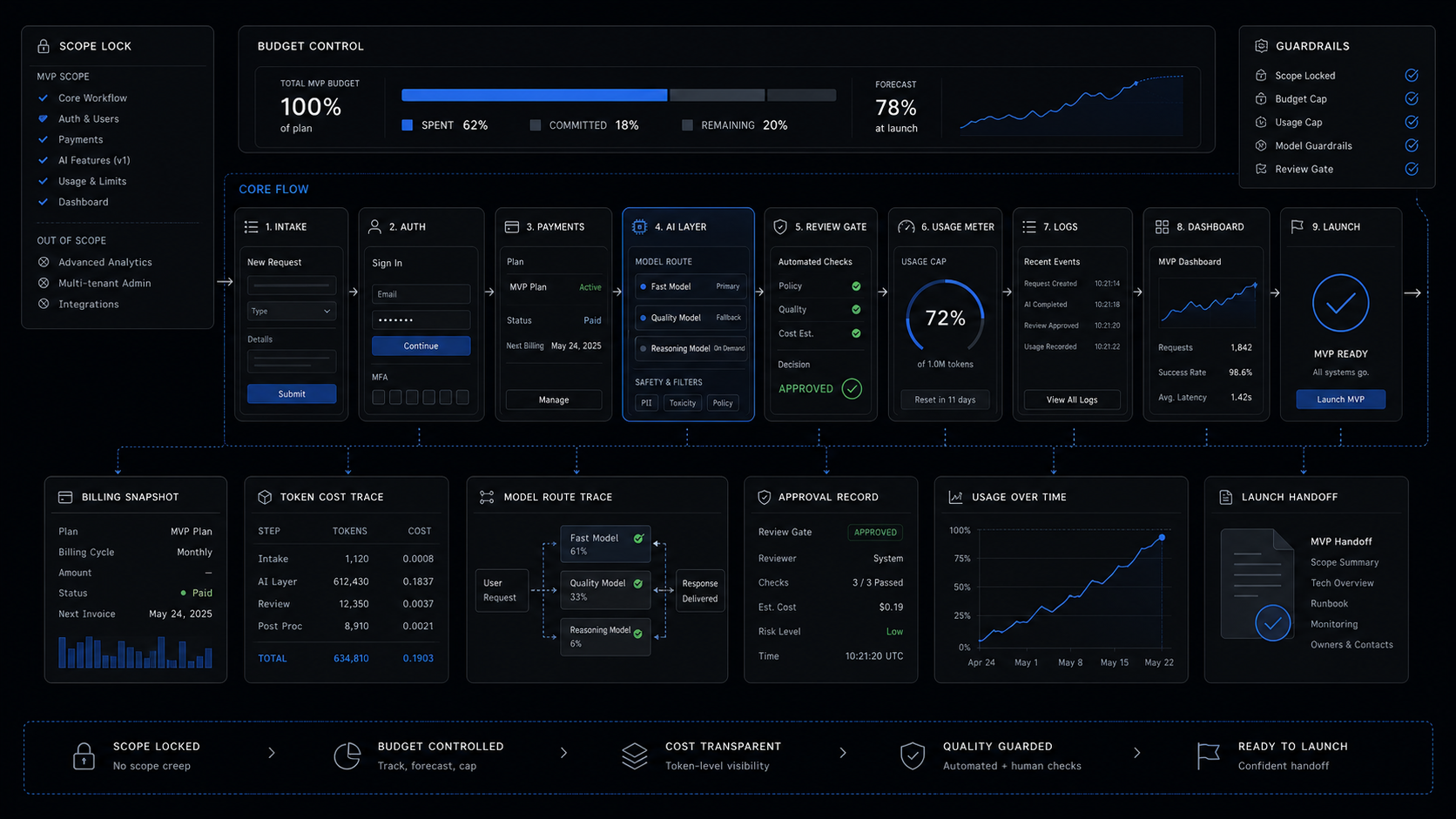
The practical budgeting rule is simple: count the number of meaningful product decisions left, not the number of screens. A marketing-page prototype might finish cheaply in either tool. A multi-tenant SaaS MVP with workspaces, billing states, file uploads, permissions, dashboards, and admin actions will create many more iterations, and each iteration consumes credits or tokens.
Backend And Auth: Pick The Data Model Before The Tool
The best tool is the one that makes the data model obvious before the demo gets convincing. A SaaS MVP is not just generated UI. It is accounts, permissions, records, events, jobs, notifications, and recovery paths.
Lovable's native Supabase integration is a strong fit when your MVP should be planned around PostgreSQL from the start. Supabase is an open-source backend platform built around PostgreSQL, authentication, storage, realtime features, and serverless edge functions. Lovable says its integration can generate tables and schema from prompts, add authentication flows, work with file storage, stream realtime updates, and create edge functions for tasks like email, payments, and external APIs.
Bolt's backend story is broader than the old "static prototype" category. Bolt Cloud includes hosting, domains, unlimited databases, authentication, file storage, server functions, analytics, and Stripe payments. Bolt Database can be created automatically when the project needs one, and Bolt can also use Supabase. The caveat is important: Bolt says Supabase connections are available with Vite projects, and Next.js projects are not supported at this time. It also says switching from Bolt Database to Supabase later requires extra steps.
Start with the schema, not the screen
For a membership SaaS, name the core tables before prompting:
workspaces,members,subscriptions,usage_events, andaudit_logs. The UI can change. Those entities decide whether the app can support real customers.Write the permission cases
Row-level security means database rules that decide which rows a user can access. Ask for owner, admin, member, and suspended-user behavior before polishing the dashboard.
Force the billing edge cases
Include trial, active, past-due, canceled, and refunded states before the first sales demo. Payment success is not the risk. The unhappy paths are.
Export the operating checklist
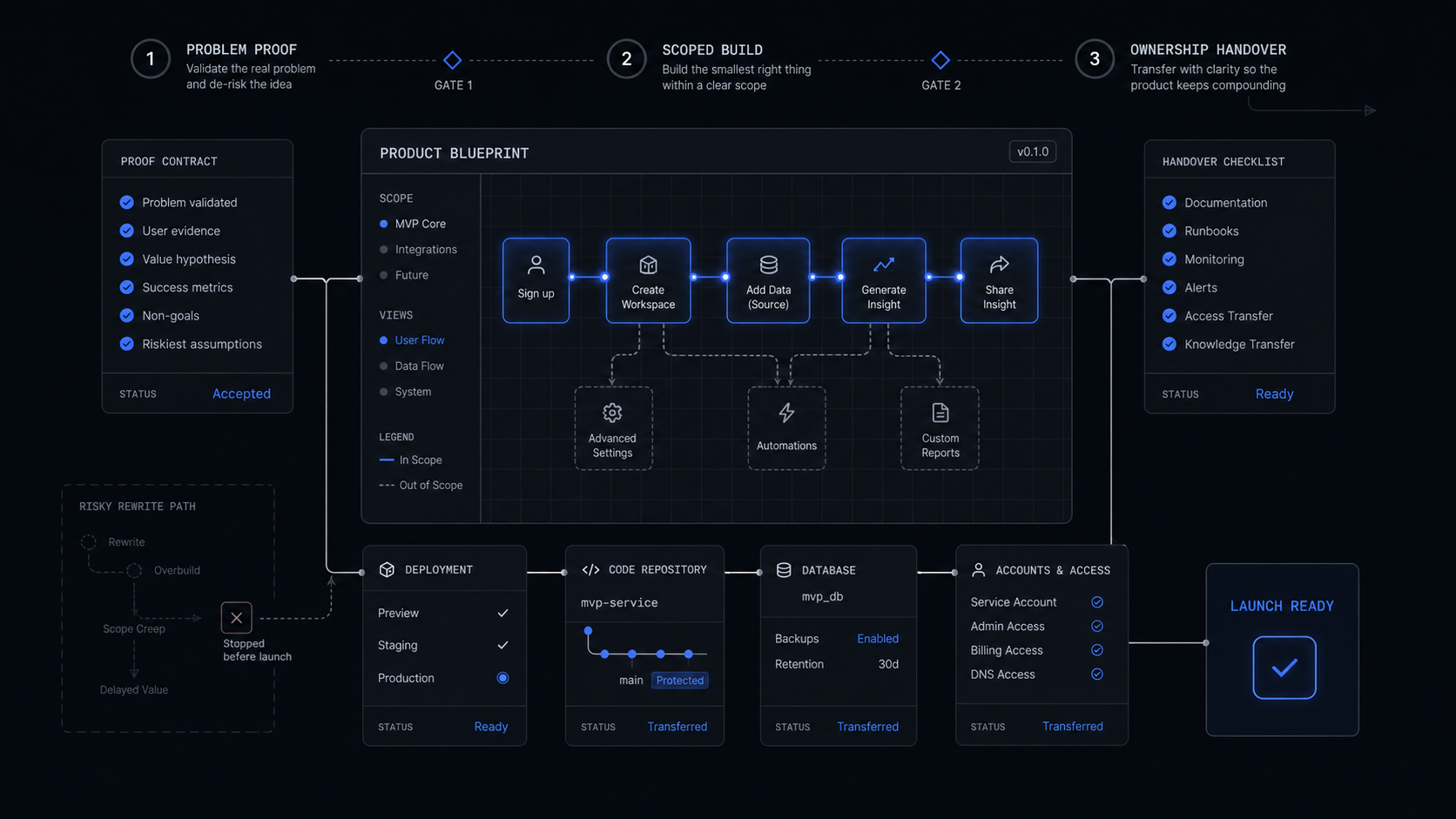
The prototype is not ready for handoff until the team can point to the repo, environment variables, database schema, auth provider, payment webhooks, logs, and known unsupported states.
This is where the choice flips. If you already know the MVP belongs on Supabase and the founder needs help shaping a working full-stack prototype, Lovable has the cleaner path. If you need a fast interface loop, code-level edits, built-in cloud primitives, and a project that can move through GitHub, Bolt has a better operating posture.
Code Ownership And Handoff
The prototype becomes valuable when a product team can take it apart. If the code, schema, branches, deployment path, and security assumptions are trapped inside the builder, the MVP is not cheaper. The cost has just moved to the handoff.
Lovable says projects produce a codebase that can sync to GitHub and integrate into existing engineering workflows. Its GitHub connection supports code backup, pull requests, branches, code reviews, local IDE work, external deployment, and active-branch sync back into Lovable. Lovable also says paid plans can download the codebase directly from the Code editor.
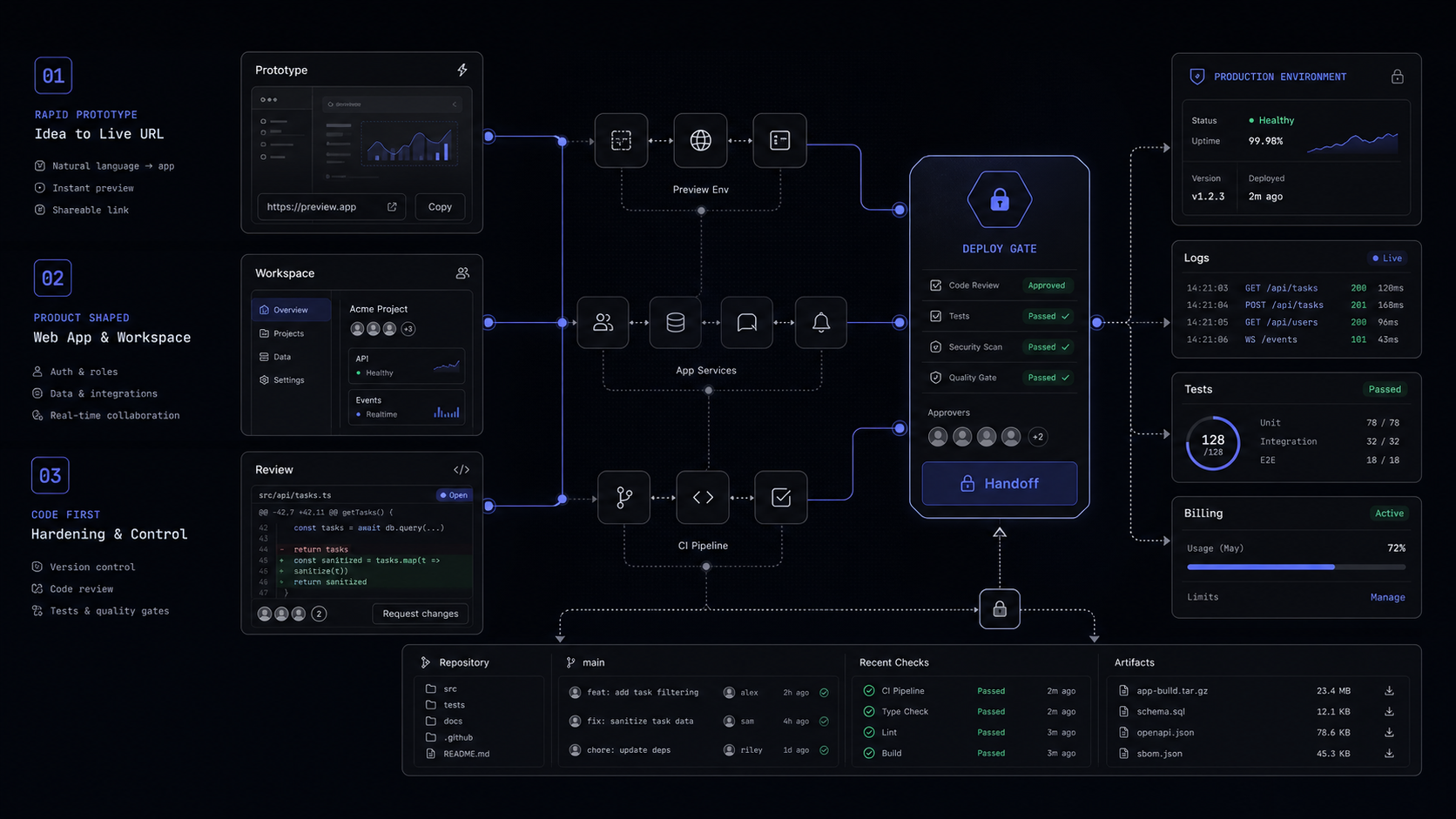
Bolt takes a similar ownership stance through GitHub. Bolt says the GitHub connection backs up work with a full history of changes, avoids lock-in, lets users move from Bolt to GitHub and back, and allows publishing with other services besides Bolt hosting or the Bolt Netlify integration. Bolt can create a new private GitHub repository from a Bolt project and can import an existing GitHub repository into a new Bolt project. Bolt's Code View also lets users view raw code, edit files, create files, delete files, target specific files, and lock files or directories.
The handoff checklist should be part of the tool decision:
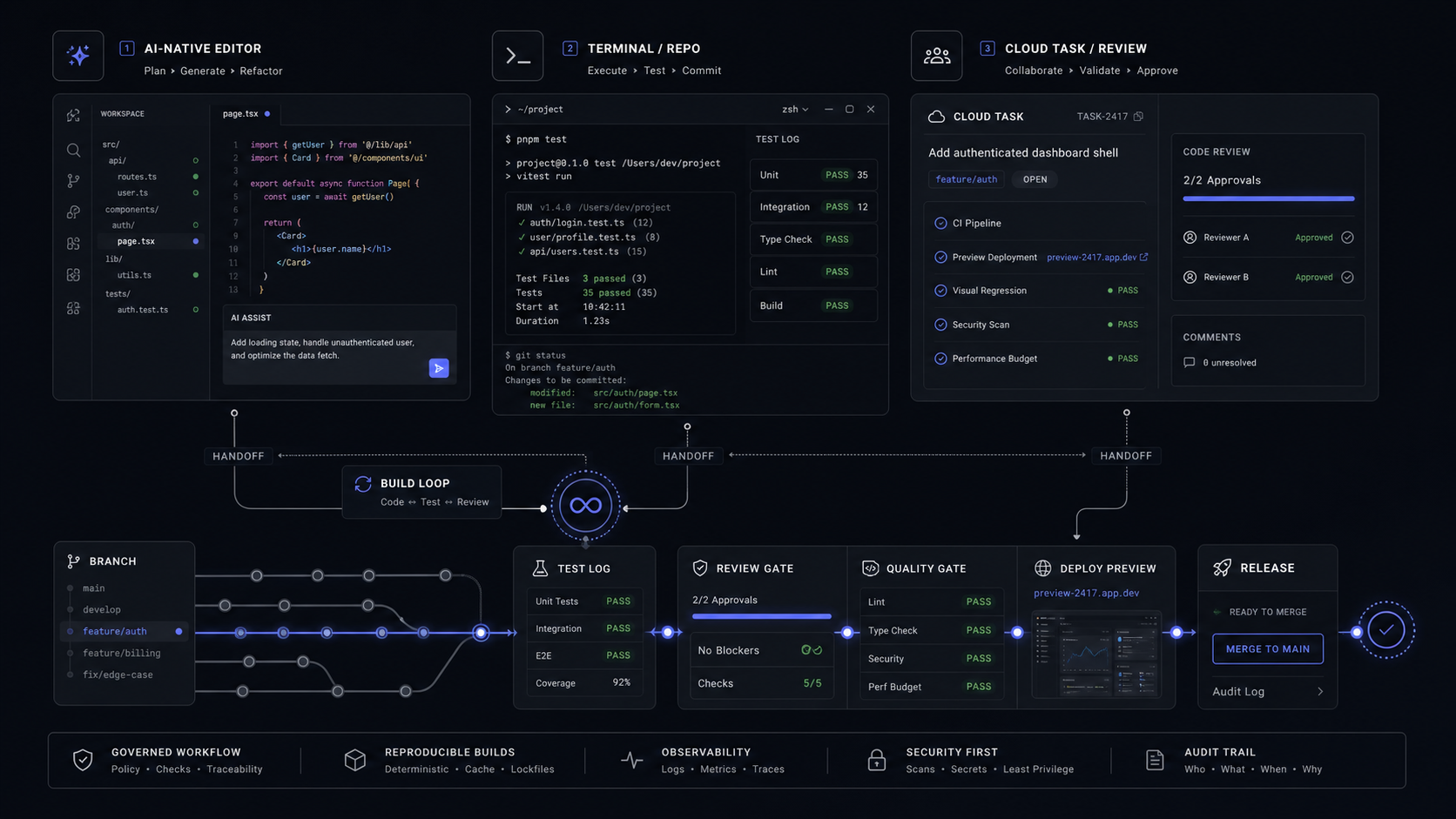
The deeper guide to these tool boundaries is our AI coding tools for SaaS MVPs piece. The short version here: use Lovable or Bolt to compress the first working version, then move into a controlled build system before the prototype becomes the production dependency.
What Breaks After The Demo
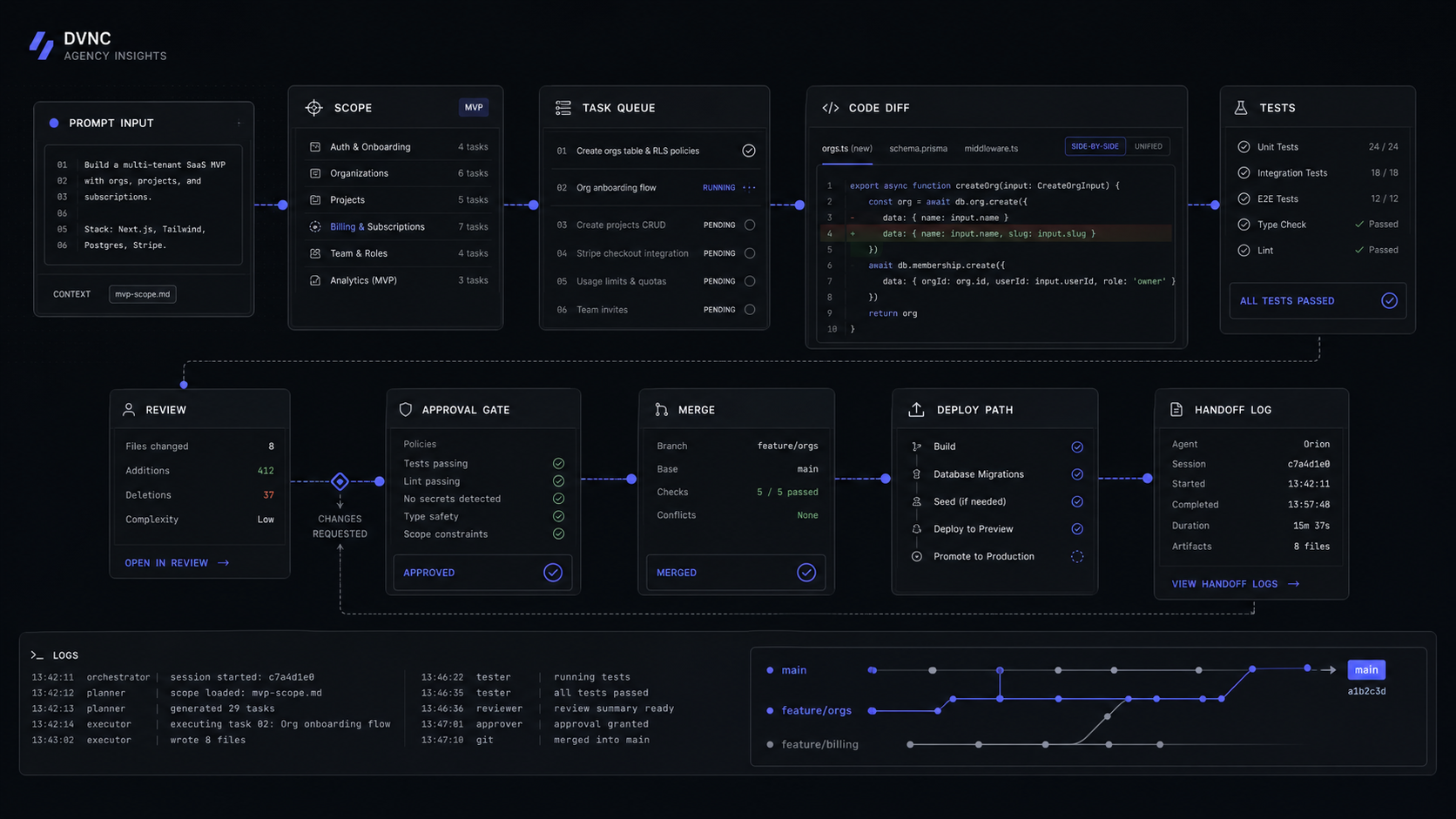
The demo breaks when the product starts making promises the system cannot keep. That is why a generated MVP needs logs, approvals where risk is high, human handoff for unresolved states, and a clear owner for every external integration.
Gartner predicted on June 25, 2025 that over 40% of agentic AI projects would be canceled by the end of 2027 because of escalating costs, unclear business value, or inadequate risk controls. That warning applies to AI-generated SaaS builds too. The prototype is not the risky part. The risky part is letting generated workflows, unclear data access, and unpriced iteration become the operating model.
Use this reference scenario. A founder builds a booking SaaS that lets vendors create availability, customers reserve slots, and admins resolve disputes. The tool can generate the first interface quickly. The production plan still needs vendor permissions, customer permissions, admin override rules, cancellation states, payment webhook retries, transactional emails, audit logs, and a support path when the AI-generated flow cannot classify the problem.
If those controls feel heavy, the MVP is probably overscoped. The correct move is not to ask the builder for more screens. The correct move is to cut the MVP back to one core workflow, define the failure states, and build that workflow well.
Decision Rule
Choose Lovable when your first serious question is "Can we turn this idea into a full-stack Supabase prototype with auth and a database fast enough to validate demand?" It is especially useful for a founder who needs the app structure, backend, and deployment path to stay in one guided build loop.
Choose Bolt when your first serious question is "Can we move fast while keeping code, design-system context, GitHub, and cloud deployment close to the surface?" It is especially useful when a technical founder or product team wants to edit code directly, import from GitHub, or shape a prototype around real UI components.
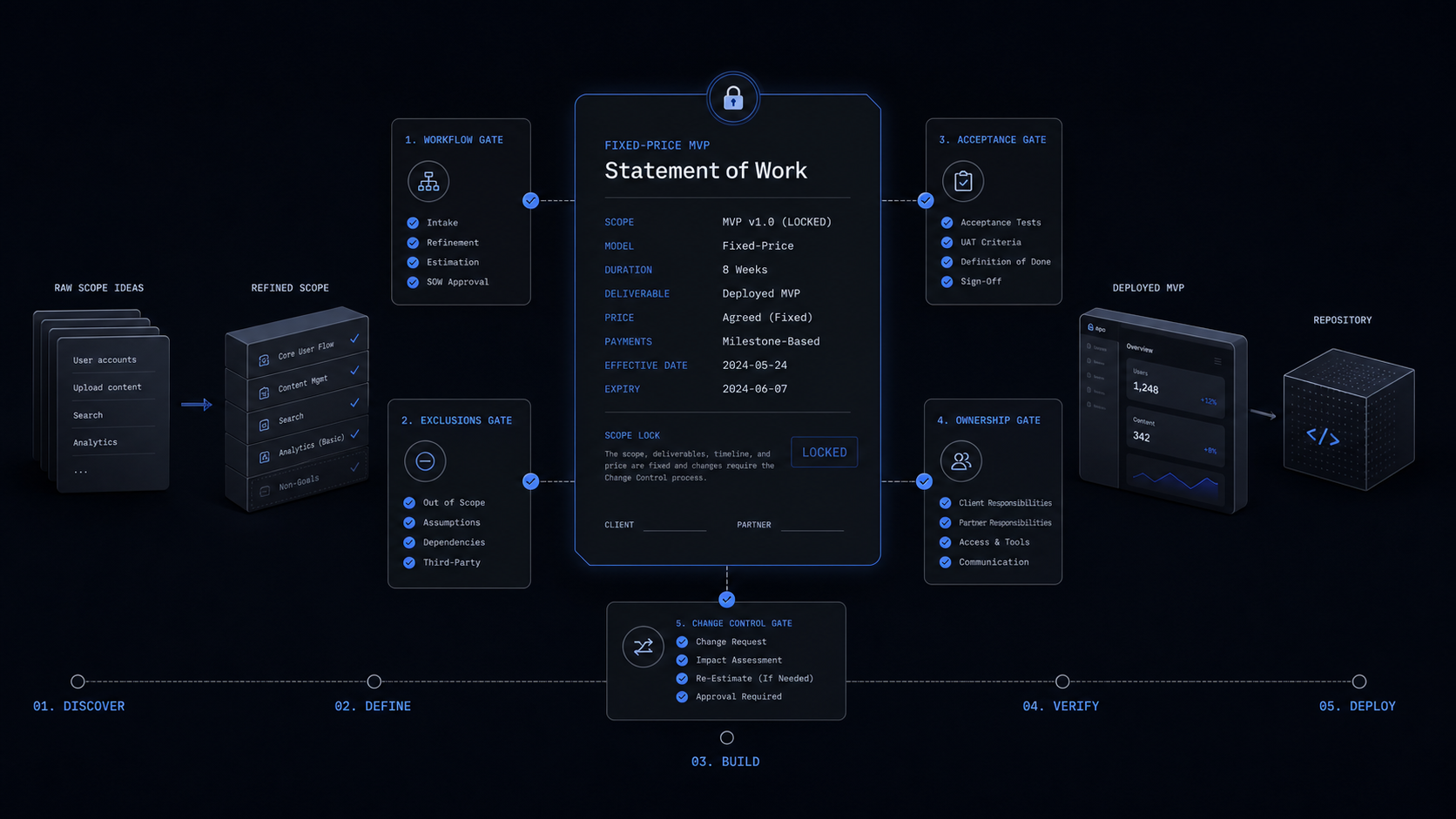
Choose a fixed-scope build when the product has to support customers, payments, permissions, operations, or investor diligence. At that point, Lovable and Bolt are useful inputs, but the deliverable is a controlled SaaS system: repo, backend, auth, payments, dashboard, AI layer where needed, logs, QA, deployment, and handoff.
Which is better, Lovable or Bolt?
Lovable is better for founder-led full-stack prototypes that should start with Supabase, authentication, and a database. Bolt is better for fast editable prototypes, design-system-aware interfaces, GitHub movement, and Bolt Cloud deployment.
Why is Bolt so expensive?
Bolt can feel expensive when the project grows because its pricing is token-based, and Bolt says most token usage comes from reading, understanding, and syncing project files. Larger projects use more tokens per message, so cost control depends on scope control.
Does Bolt support Supabase?
Yes, Bolt supports Supabase, but the detail matters. Bolt says Supabase connections are available with Vite projects, and Next.js projects are not supported at this time.
Can Lovable export code?
Yes. Lovable says projects can sync to GitHub, changes can move between Lovable and the active GitHub branch, and paid plans can download the codebase directly from the Code editor.
Can Lovable or Bolt build a production SaaS MVP?
They can help create the first working version, but production depends on the parts around the generated app: schema, permissions, billing states, tests, logs, deployment, and handoff. Treat the builder as the prototype engine, not the whole operating system.
Scope Your AI SaaS MVP
Bring the prototype, the repo, or the messy first build. DVNC scopes the one-core-workflow MVP, backend, auth, payments, dashboard, AI layer, and handoff plan before code starts.
Jun 9, 2026