MVP Software Development Company: Fixed-Price, Hourly, or AI Handoff?
Choose an MVP software development company by delivery model, scope control, code ownership, and AI prototype handoff before you sign.

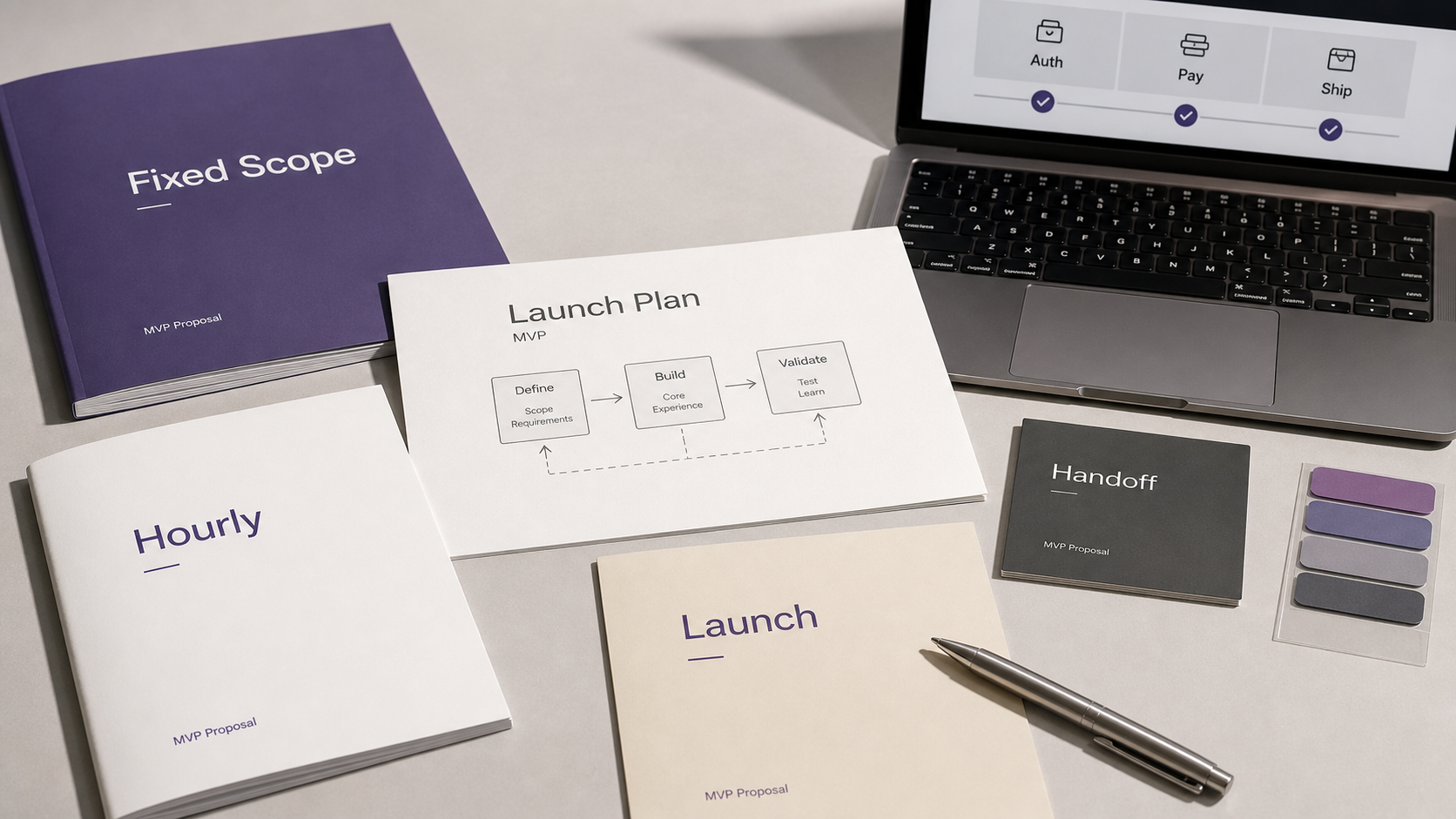
Choose an MVP software development company by the delivery model first, not the portfolio polish. A fixed-price studio is the right fit when one core workflow is clear; an hourly agency or dedicated team is only better when discovery is still moving or the product needs long-term capacity.
The Short Verdict
An MVP software development company is worth hiring when it turns a validated workflow into a product users can operate, pay for, and your team can own. An MVP, or minimum viable product, is the smallest version that proves one core workflow with real users. It is not a feature sampler, a design prototype, or a backlog with a login screen.
Choose the delivery model before you compare logos:
- Fixed-price studio: best when the core workflow, user role, and acceptance criteria are clear enough to price. DVNC's current fixed-price MVP scope starts from $28K, runs 4-8 weeks, includes the launch site, and hands over code ownership in your GitHub.
- Hourly agency: best when discovery is still moving and you accept budget variability in exchange for flexibility.
- Dedicated team: best when the MVP is the start of a longer product program and you need ongoing capacity after launch.
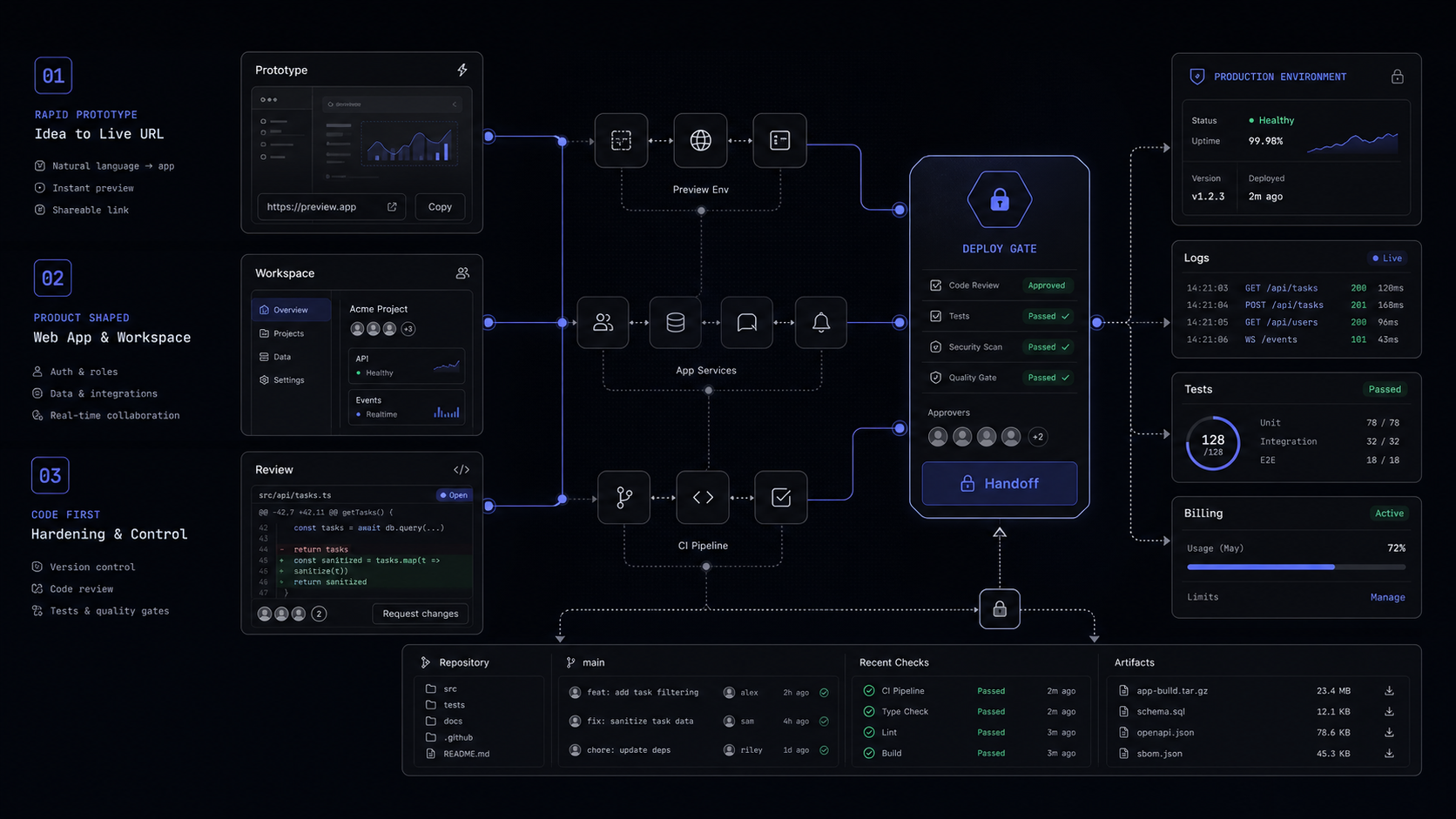
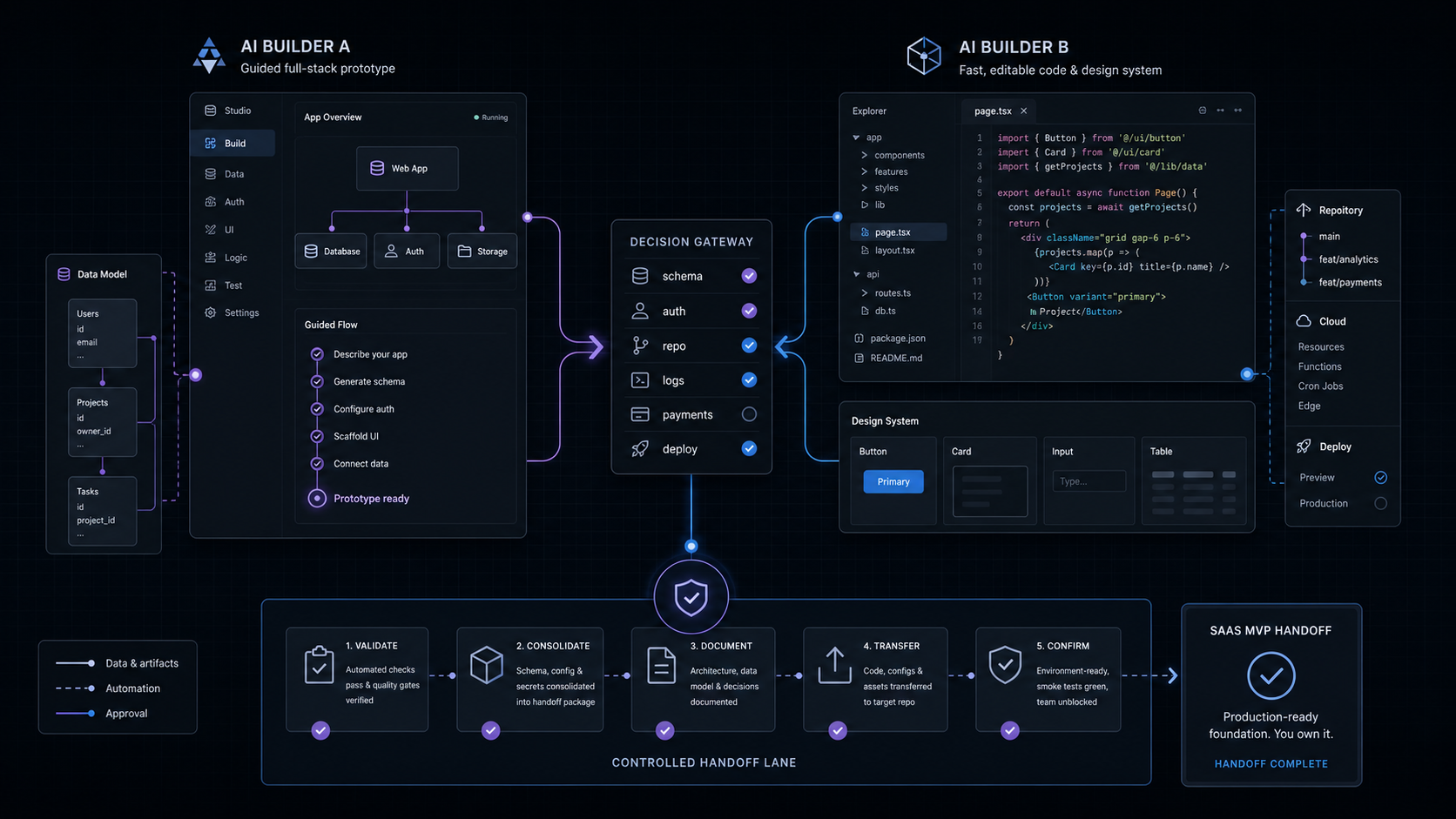
- AI-prototype handoff: best when a Lovable, Bolt, Replit, Cursor, or internal prototype proves the flow, but the production version still needs auth, payments, data rules, deployment, analytics, and error tracking.
The wrong move is asking every company for the same "estimate" before you know which model you are buying. A fixed-price proposal should protect the launch boundary. An hourly proposal should show how decisions get made before spend drifts. A dedicated team proposal should explain what the team owns after the first release. An AI handoff proposal should separate demo code from production code without pretending the demo is worthless.

Compare The Four MVP Delivery Models
Fixed price is not better by default. It is better when the first release can be described tightly enough that the company can protect scope, budget, and handoff in writing.
S-PRO describes fixed price, time and material, dedicated team, and hybrid as separate collaboration models. That distinction matters because each model optimizes for a different risk. Fixed price controls budget and timeline when requirements are stable. Time and material gives flexibility when the product is still changing. A dedicated team gives focus for longer partnerships where priorities may shift. Hybrid tries to hold a stable base while leaving room for uncertain pieces.
The pricing spread in the market is wide enough that hourly rate alone is a poor filter. DesignRush's July 07, 2026 MVP directory listed 477 companies. Visible entries included Bytes Technolab at $20/hr with a $1,000-$10,000 minimal budget, Goji Labs at $149/hr, and ELEKS at $50/hr with a $25,000-$50,000 minimal budget.
Those numbers do not tell you who will ship the right MVP. They tell you the same buyer query can lead to low-budget outsourcing, premium product studios, and large engineering firms in the same consideration set. The way to compare them is not "who has the lowest rate?" It is "who can describe the smallest launchable product, price the real production work, and hand over something we can keep building?"

What A Real MVP Company Must Scope Before Code
The company should scope the operating product, not just the screen list. If your proposal says "dashboard, onboarding, payments, admin" but never defines the user, the data, and the acceptance criteria, you are buying ambiguity.
A production MVP needs a narrow core and boring operational details. DVNC's fixed-price MVP includes one core user flow, auth and payments through Stripe or LemonSqueezy, deployable infrastructure, analytics, error tracking, a launch site, full code ownership in your GitHub, and 30-day post-launch tuning. The default technical base is Next.js, Cloudflare, and Vercel.
Use that shape as a test even if you hire someone else. A serious MVP company can answer these before code:
Name The User And Workflow
Write the user role and the workflow in one sentence. "A sales manager uploads a lead list and gets prioritized follow-up drafts" is scoping. "AI sales platform" is branding.
Define The Successful Run
Write the start state, the action, the expected output, and the failure state. If a payment fails, an AI response is low confidence, or an integration times out, the product still needs a designed path.
Separate Launch Work From Later Work
Put auth, payments, deployment, analytics, and error tracking in the launch scope. Put multi-role permissions, advanced reporting, bulk operations, and complex admin controls into the later backlog unless the core workflow cannot run without them.
Lock Handoff Before Build
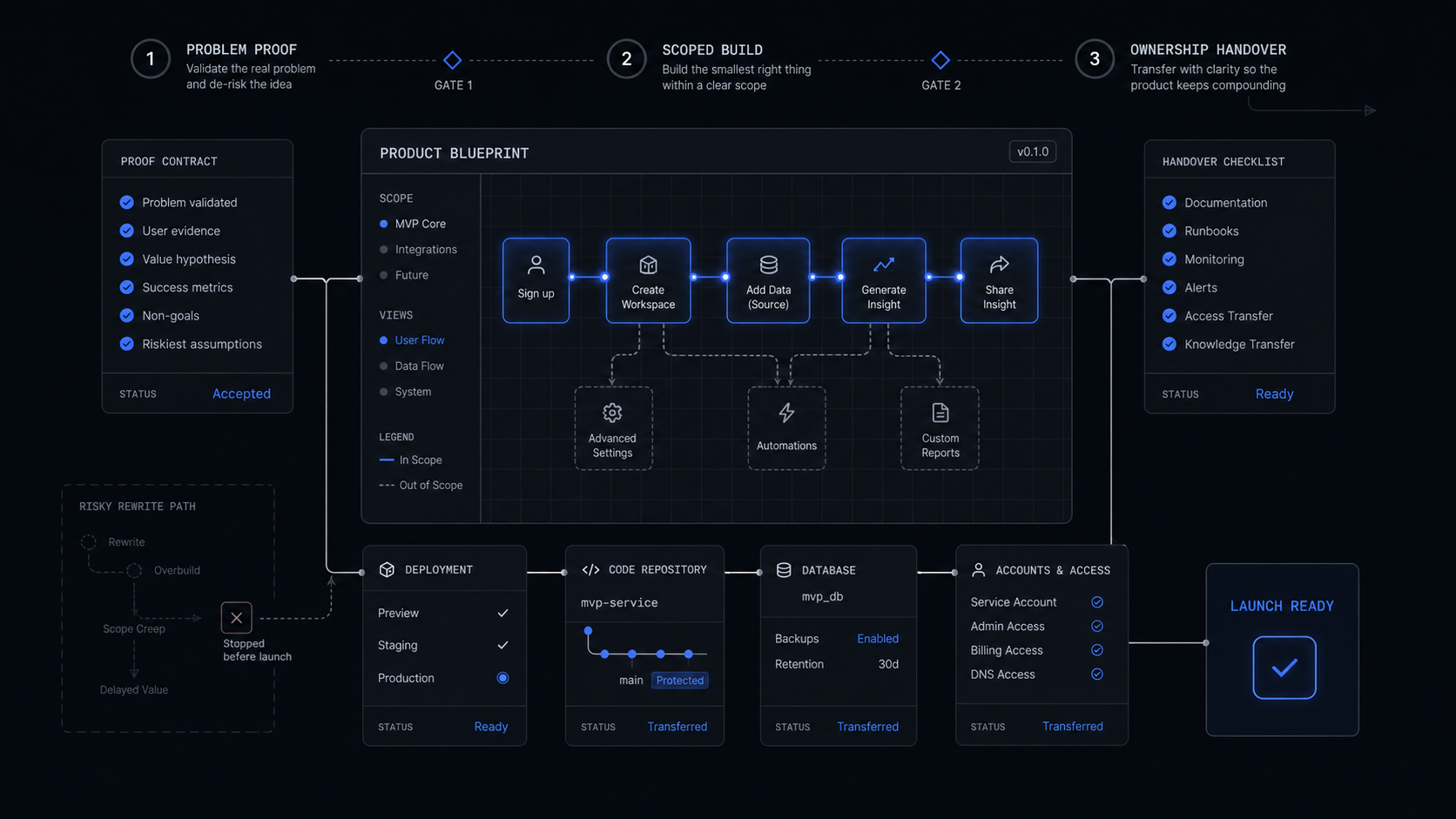
Require repository access, environment documentation, deployment notes, analytics access, billing access, and a clean list of known tradeoffs. Code ownership is not a final zip file. It is the ability to operate the product after launch.
The cleanest v1 usually feels smaller than the sales deck. That is the point. S-PRO states that 80% of software functionality often goes unused. Treat the exact percentage as a warning label: most wasted MVP spend hides in features that look reasonable in a spreadsheet but do not prove the core behavior.
How To Evaluate The Company In One Call
The first call should test judgment, not friendliness. A strong MVP company will challenge scope, expose missing decisions, and say what it would cut before it talks about team size.
Use these questions:
- What is the single workflow you would build first?
- Which features would you cut from the first release?
- Which parts of the product need production hardening before real users touch it?
- What has to be true before you can give a fixed price?
- What happens when we change scope after the proposal is signed?
- Who owns the GitHub repository, deployment accounts, payment account, analytics, and error tracking?
- What does the handoff include after launch?
- If our prototype was built with AI tools, what gets reused, what gets audited, and what gets rebuilt?
The answers should be specific enough to put into a statement of work. If the company says it can start immediately but cannot name exclusions, acceptance criteria, or handoff artifacts, the risk has not disappeared. It has moved into the build.
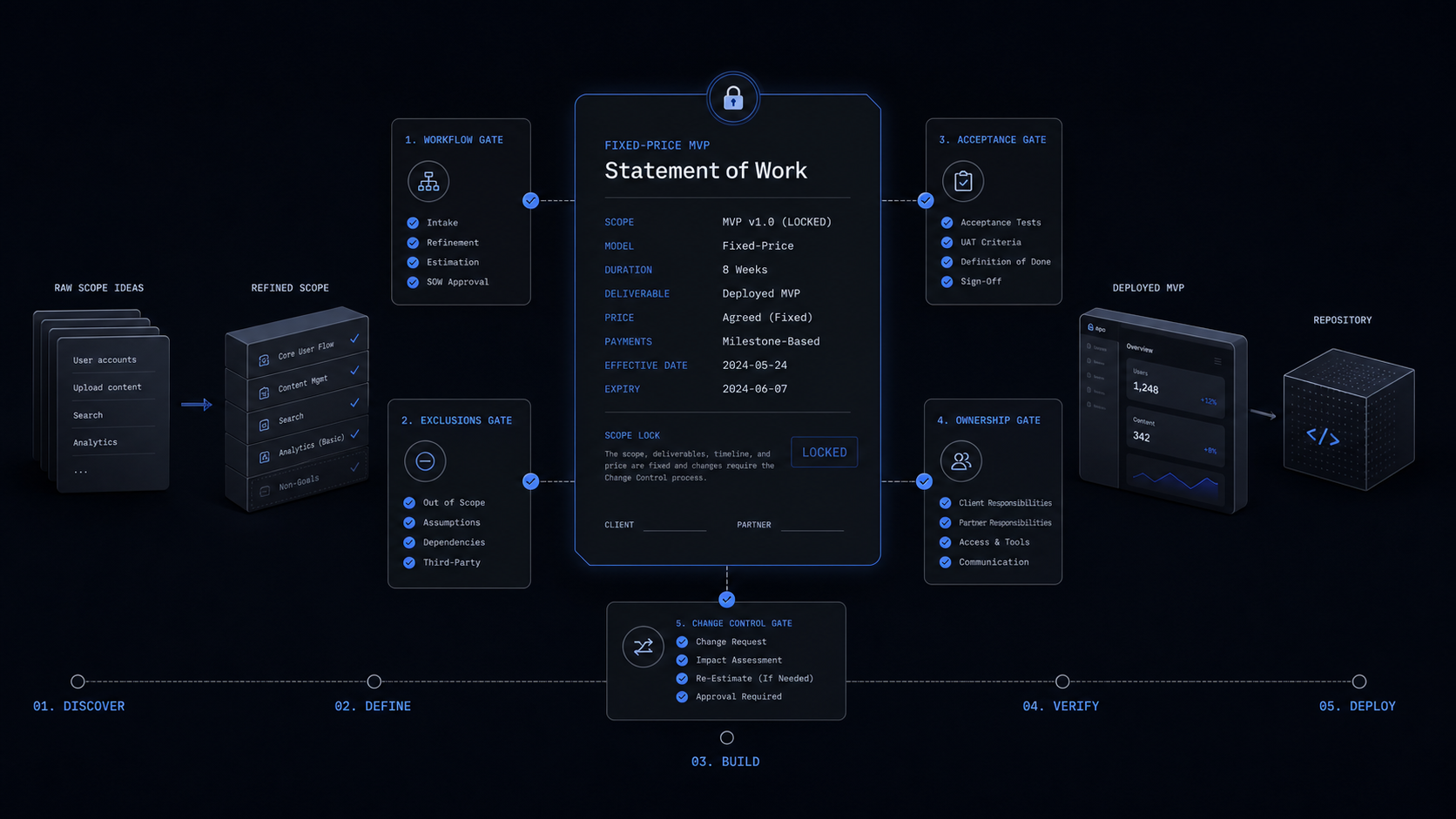
For fixed price, ask for a proposal that names the workflow, screens, data objects, integrations, acceptance criteria, exclusions, launch site scope, and ownership terms. The fixed-price SOW checklist is the deeper version of that gate.
When A Big Agency, Boutique Studio, Freelancer, Or AI Builder Wins
Each option wins in a different situation. The buyer mistake is hiring the strongest-looking vendor for the wrong job.
A large agency wins when risk is organizational. If your MVP touches regulated data, complex enterprise integrations, security review, or a procurement process, breadth can matter. ScienceSoft's public MVP page positions the company with 750+ IT pros, 30+ industries covered, 22 years in cybersecurity, and over 50% senior or lead talent with 9-20 years of experience. Its cost estimates are also larger: $40,000-$120,000 for a mobile MVP, $80,000-$160,000 for a web app MVP, and $120,000-$300,000 for a SaaS MVP.
A boutique fixed-price studio wins when risk is focus. If you know the first workflow and need a senior team to ship it without expanding the brief, the smaller fixed-scope model is usually cleaner. You are buying a product boundary, launch readiness, and handoff, not a bench of interchangeable capacity.
A freelancer wins when the job is narrow. A freelancer can be the right choice for a prototype, landing page, integration spike, or a contained feature inside a product your team already operates. A freelancer is a risky default when you need product scoping, UX decisions, backend architecture, payments, deployment, analytics, and post-launch handoff owned together.
An AI builder wins before the scope hardens. AI app builders are useful for proving a workflow, pressure-testing copy, showing investors the interaction, or finding the missing data model. They are not a substitute for a production owner when users, payments, privacy, uptime, and future engineering hires are on the line.

- Fixed price makes tradeoffs visible before the build starts.
- Hourly and dedicated models handle uncertainty better when the product is still moving.
- AI prototypes can shorten scoping because the team can inspect a working reference.
- Fixed price fails when the buyer hides uncertainty or keeps adding features.
- Hourly work fails when no one controls decisions, spend, and acceptance.
- AI prototypes create rewrite debt when generated code is treated as production architecture.
Red Flags Before You Sign
A weak MVP proposal sounds flexible because the hard parts are missing. The danger is not that the company lacks skill. The danger is that no one has defined what "done" means.
Reject or pause the process when you see these signs:
- The proposal prices "features" but never describes the core workflow.
- The team cannot name what it would cut from v1.
- The estimate depends on hourly effort with no decision gates or spend cap.
- The handoff is vague about GitHub ownership, deployment access, analytics, billing, and error tracking.
- The AI prototype is accepted as production-ready without a repo audit, data review, or security review.
- The company promises speed but avoids acceptance criteria.
- The launch site is treated as optional even though users and investors need to understand the product before they try it.
The best companies will slow the sale down just enough to protect the build. That is a feature, not friction. The scoping conversation is where you find out whether the team can defend your budget when the backlog starts to expand.
The Scope Template To Send Before The Proposal
Send a one-page scope before asking for price. You will get cleaner proposals and expose weak partners faster.
Use this structure:
- Product sentence: "We help [user] do [workflow] so they can get [outcome]."
- Primary user: the one role that must succeed at launch.
- Core workflow: the start, action, output, and failure path.
- Data objects: the records the product creates, reads, updates, and deletes.
- Integrations: payments, email, CRM, AI model, internal tool, or no external integration.
- Launch site: positioning, core page, signup path, analytics, and conversion event.
- Production basics: auth, payments, deployment, analytics, error tracking, backup access, and environment documentation.
- Acceptance criteria: what must be true for the build to be accepted.
- Exclusions: the tempting features that wait until after launch.
- Handoff: repository, deployment, docs, credentials, and known tradeoffs.
Then ask the company to mark each line as included, excluded, or requires discovery. The proposal becomes easier to compare because you are no longer comparing personalities. You are comparing how each team handles scope.
For timeline expectations, use the same discipline. A small fixed-scope MVP can fit a 4-8 week studio build when the workflow is clear and decisions are available. More complex products need more calendar because integrations, reviews, security, and stakeholder feedback set the clock. The MVP timeline planning guide breaks down the usual blockers.
How much does an MVP software development company cost?
Public pricing varies by delivery model and scope. DVNC's fixed-price MVP starts from $28K, visible DesignRush entries include $20/hr, $50/hr, and $149/hr examples, and ScienceSoft estimates $120,000-$300,000 for a SaaS MVP.
Should I choose fixed price or hourly for an MVP?
Choose fixed price when the core workflow, acceptance criteria, and exclusions are clear. Choose hourly or a dedicated team when the product is still changing and you need flexibility more than budget certainty.
Can an AI-built prototype replace an MVP company?
No. Use the AI prototype as a working reference for scoping, user testing, and investor conversations. Before real users depend on it, a production owner still needs to handle auth, data, payments, deployment, analytics, error tracking, security, and code ownership.
What should be in an MVP development statement of work?
The SOW should name the workflow, screens, data objects, integrations, acceptance criteria, exclusions, timeline, payment milestones, ownership terms, handoff artifacts, and change-control process. If any of those are missing, price is not the real agreement yet.
What is the fastest safe MVP timeline?
For a clear fixed-scope SaaS MVP, 4-8 weeks is a realistic studio range when decisions are available and the first workflow is constrained. If the project needs deep integrations, compliance review, multi-role permissions, or ongoing discovery, the timeline should expand before the proposal is signed.
Scope Your MVP
Turn one core workflow into a fixed-price MVP with the launch site included, production basics covered, and code ownership from day one.
Jul 7, 2026