How Long It Takes to Build an MVP in 2026 (And What Actually Sets the Clock)
The honest 2026 timeline for a SaaS MVP: why AI tools compressed the prototype but not the production build, and what actually sets the clock.


A production SaaS MVP in 2026 usually ships in four to ten weeks, and AI build tools barely move that number. They collapsed the prototype to an afternoon, but the prototype was never the slow part. Hardening one core workflow so real users, real payments, and a diligence review survive it is the slow part, and your scope sets that clock far more than your tools do.
The short answer
Budget four to ten weeks for a real MVP, a single core workflow with working auth and payments that a stranger can pay to use. That lines up with what the industry actually reports. The current consensus band is one to four months, split by complexity: a no-code or concierge test runs one to four weeks, a standard custom SaaS build runs two to four months, and anything in a regulated space like fintech or healthcare runs six to twelve months. A boutique that has shipped for dozens of startups puts it plainly: a real MVP "shouldn't take more than three to four months."
The wide range is the useful part. The gap between four weeks and four months is almost never about how fast anyone types. It is about how much you decided to build. That is the number you control, and it is the one this article is about.
An MVP, if the term is fuzzy, is the smallest version of your product that proves one core workflow with real users, not a demo and not "version one of everything."
Why the honest number is weeks, not a weekend
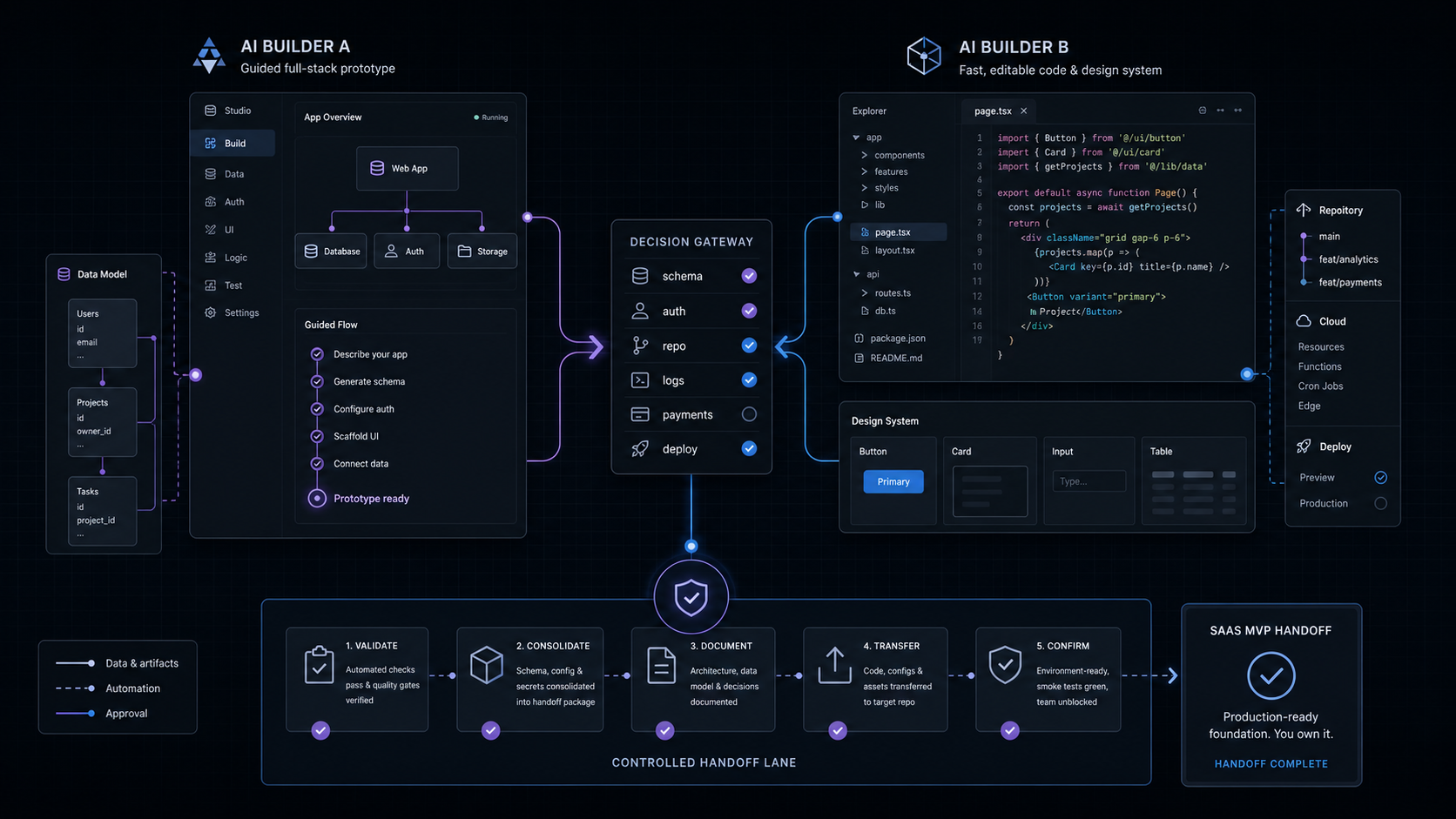
The "weekend MVP" you keep seeing is a prototype, and the tools that build it say so themselves. Lovable's own homepage promises you will "see your vision transform into a working prototype in real-time as AI builds it for you." Prototype is the right word. What comes out of an afternoon of prompting is a clickable, screenshot-ready version of the idea. It is genuinely useful for pitching, for testing a flow with five friendly users, and for deciding whether the idea is worth building at all.
It is not the thing you charge money for. The work that takes weeks is the work a prototype skips:
- Real authentication and accounts that survive password resets, session edge cases, and someone trying to see another user's data.
- Payments that actually settle, with webhooks, failed-charge handling, refunds, and the tax and receipt plumbing a real customer expects.
- Data integrity, so a half-finished action does not corrupt a record and a concurrent edit does not silently overwrite work.
- The unhappy paths: empty states, network failures, validation, the input nobody expected.
- Deploy, monitoring, and ownership, so the thing stays up and you hold the code and the keys.
Ask a general-purpose AI how long this takes and it will undersell it, cheerfully reporting that "what used to take three to six months now often takes two to eight weeks" and quoting two to four weeks for a simple build. Notice what that estimate quietly drops: every hardening item above. The prototype got faster. The production MVP, the part that decides whether a paying user trusts you, did not move nearly as much.
What actually sets the clock
Five things move an MVP timeline, and only one of them is engineering speed. Cut the first four and the build shrinks; add to them and no tool saves you.
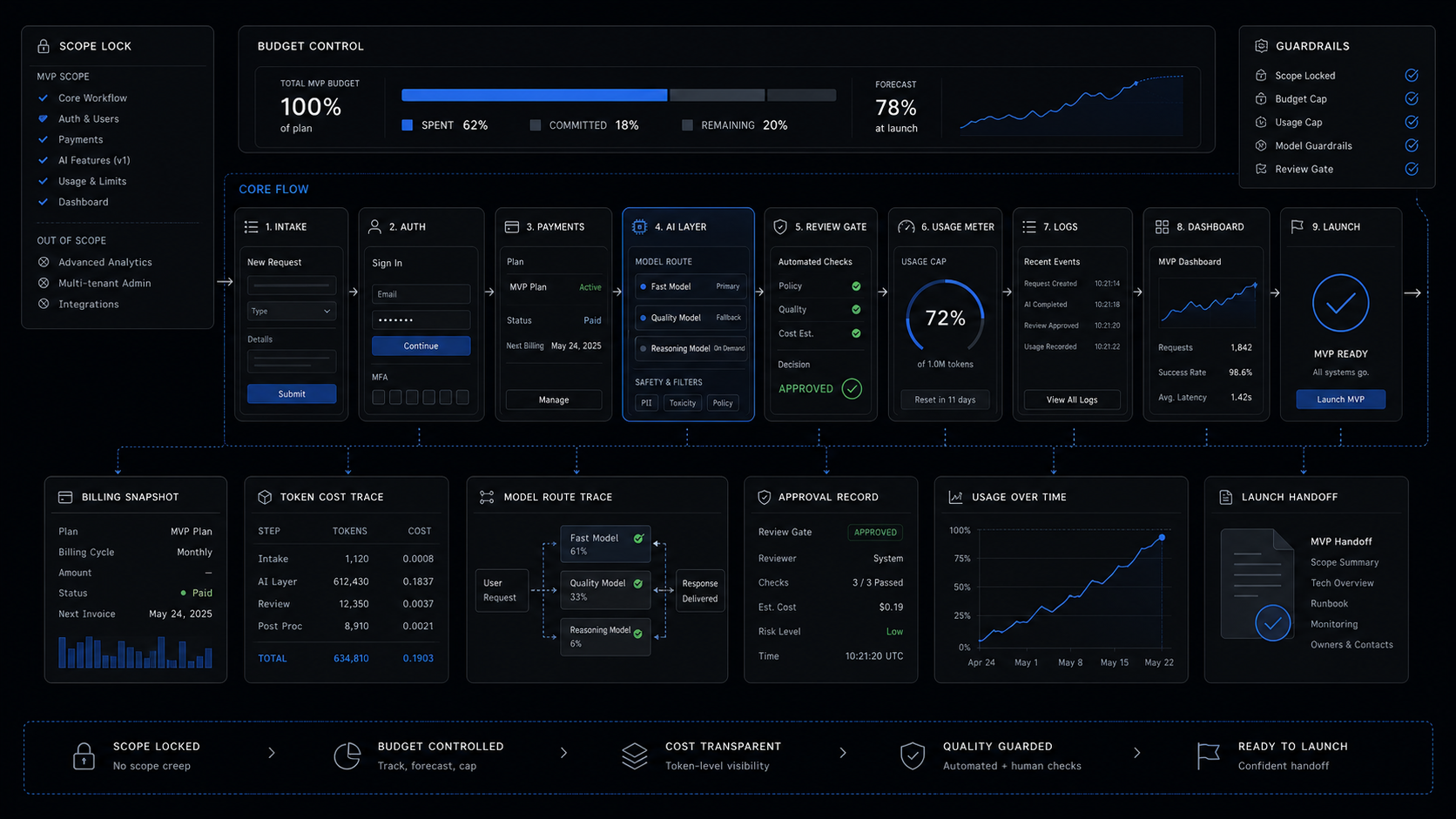
1. Scope, meaning how many core workflows. This is the single biggest driver, and it is the one founders underestimate most. The consensus research names it directly: scope creep is the top reason timelines slip, and "founders who take longer are often deciding less, not building more." One workflow done well is four weeks. Three workflows "because they're related" is three months.
2. Integrations. Every external system, a payment processor, a CRM, an email provider, a bank feed, adds real days for the parts you cannot see: auth flows, webhooks, rate limits, and failure handling. Two integrations is a rounding error. Six is a month.
3. Data sensitivity and compliance. Handling health data, financial data, or anything under GDPR moves you into the six-to-twelve-month band whether you like it or not. The code is not harder; the required care, review, and documentation are.
4. Decision latency. The clock does not stop while you decide. Every open question, "which onboarding flow, which pricing, do we need teams in v1," is a day the build waits. A team that answers scoping questions in an hour ships faster than one that debates them for a week, using the exact same engineers.
5. The quality bar. An internal tool for ten users and a public product taking credit cards need different amounts of testing, and that difference is measured in weeks.

Where AI genuinely saves time, and where it adds it
AI build tools are real leverage, just not evenly. Being honest about where the time actually goes is how you plan a schedule that holds.
Where it saves days: scaffolding a new project, generating boilerplate and CRUD, drafting a first-pass UI, sketching a database schema, and writing the obvious tests. This is most of week one, and AI can turn that week into a day or two.
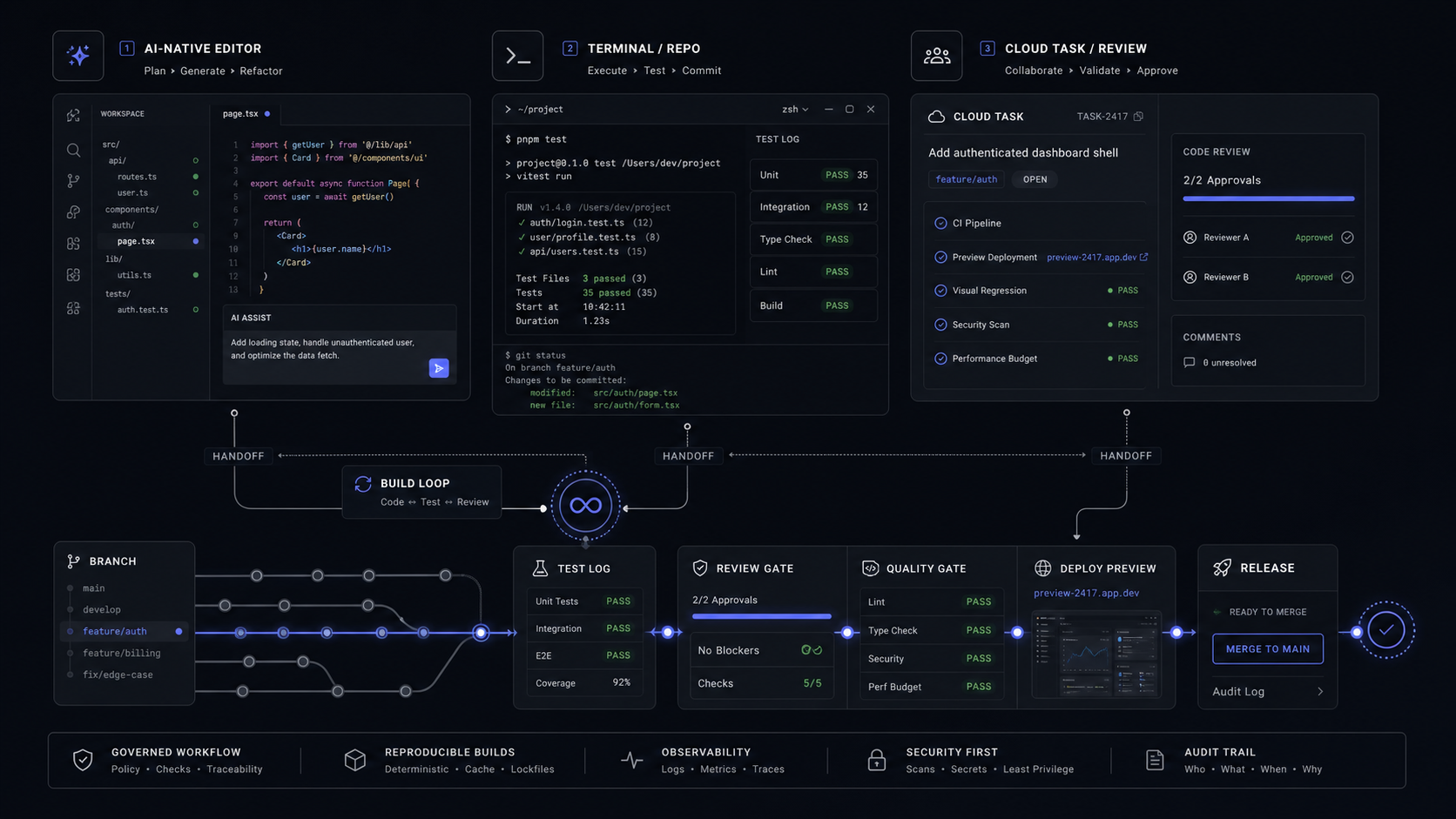
Where it adds time: reviewing generated code you did not write, reworking the parts it got subtly wrong, and handling the security edge cases and integration glue it tends to skip. Generated code is fast to produce and slow to trust, and trust is the currency of a production build.
The net effect is specific: AI compresses the front of the project, not the middle. It turns a five-day setup into one day. It does not turn three weeks of hardening one payment flow into three days, because that work is mostly judgment, edge cases, and integration, exactly the parts a model is weakest at. A senior team using these tools well ships a better MVP in slightly less time. A founder using them to skip the hardening ships a prototype and calls it a product.
A real 8-week fixed-price MVP, week by week
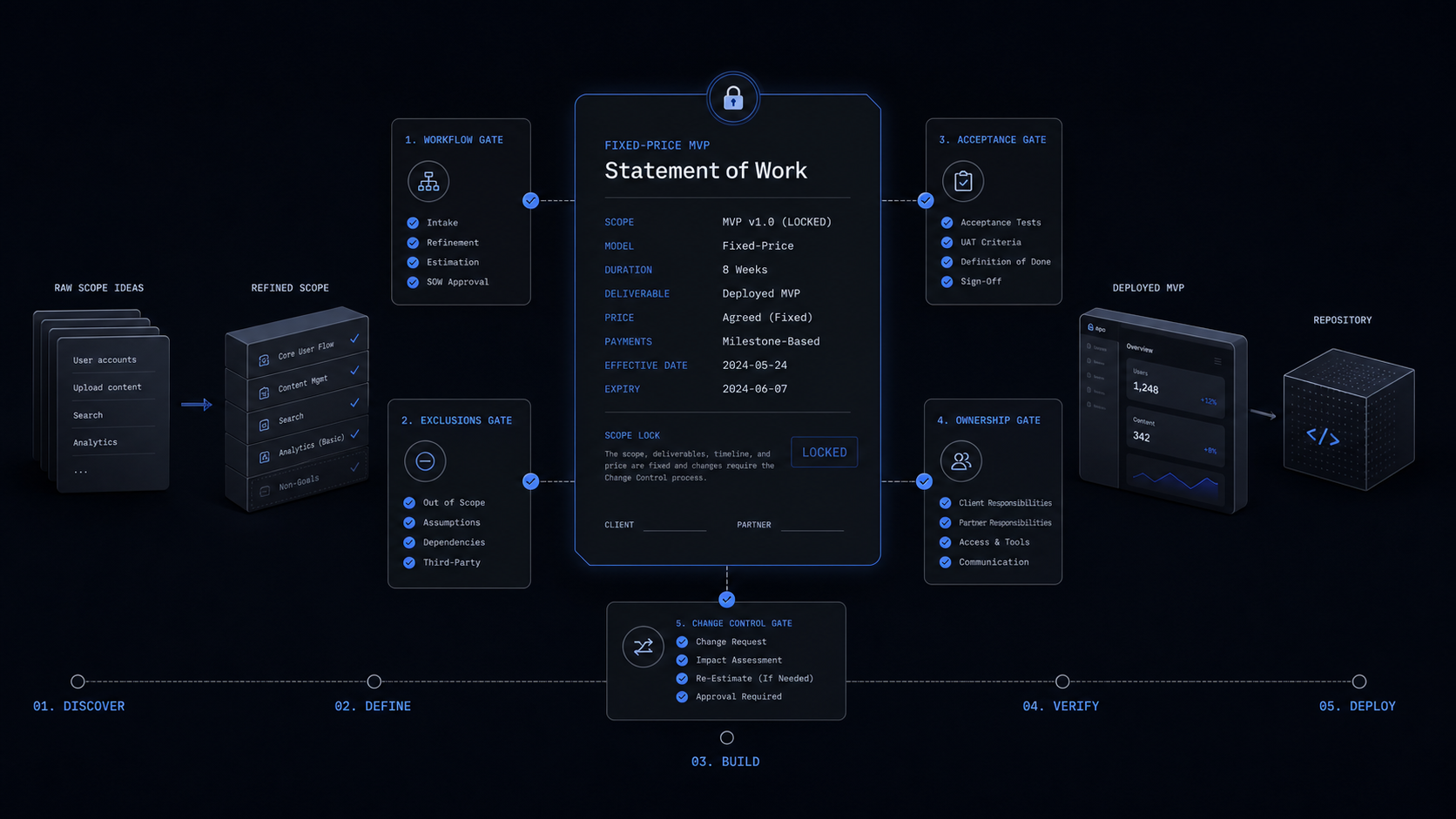
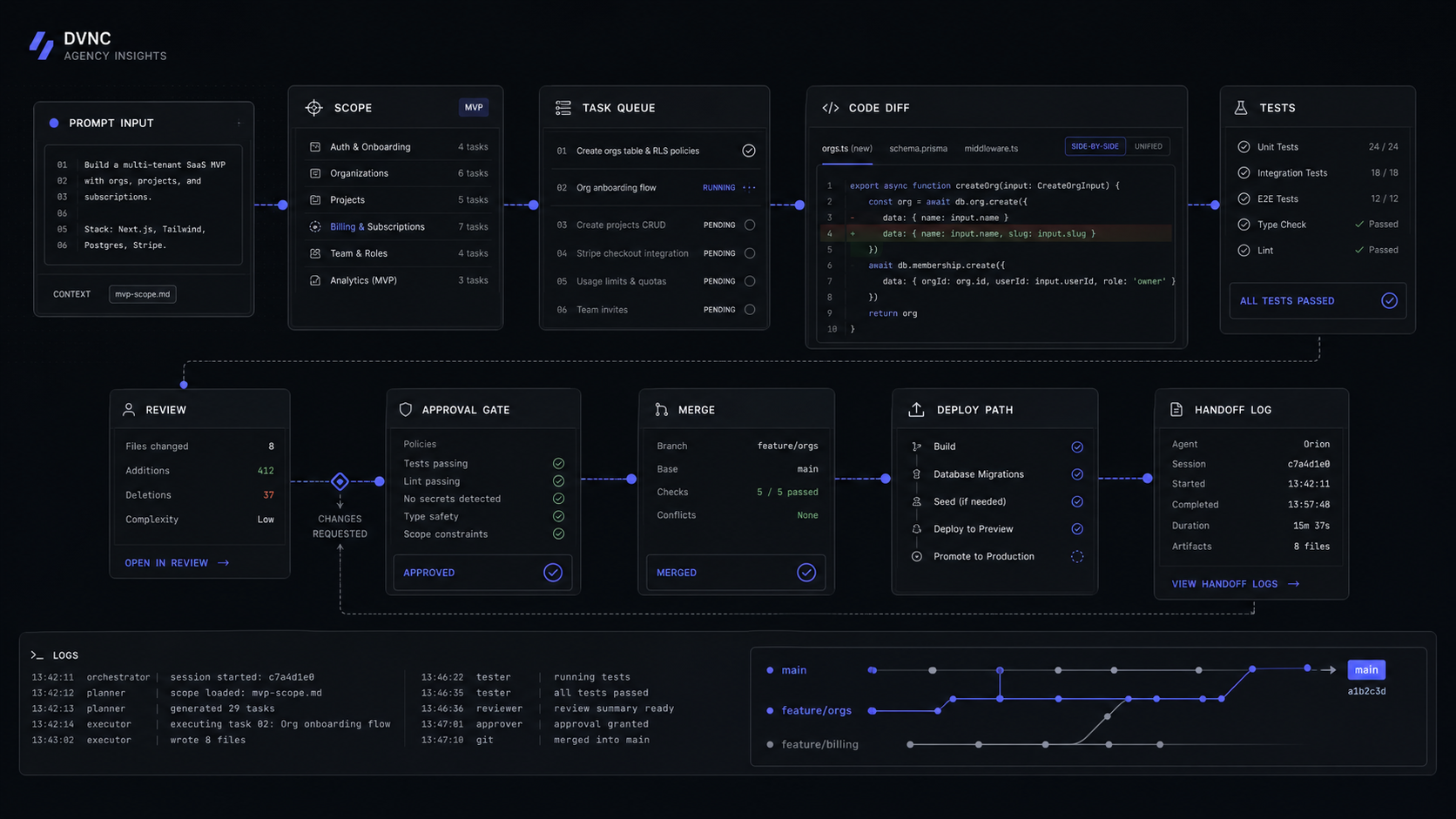
Here is how a scoped, fixed-price build actually runs. Treat the following as an illustrative reference timeline for a typical single-core-workflow SaaS MVP, not a specific client engagement. The point is where the time goes.
Week 0: Scope and lock
Before any code, we define the one core workflow, the exact cut list of what is not in v1, the integrations, and the acceptance criteria. This week is why the other seven stay on schedule. Decisions made here cost hours; the same decisions made in week five cost days.
Weeks 1 to 2: Foundation
Auth, accounts, the data model, and the app skeleton. This is where AI tooling earns its keep, compressing setup and boilerplate. The core workflow's happy path is clickable by the end of week two.
Weeks 3 to 5: The core workflow, for real
The heart of the build and the part no tool shortcuts. The one workflow gets its unhappy paths, validation, permissions, and the payment flow that actually settles. Most of the eight weeks lives here because most of the value does.
Weeks 6 to 7: Harden and launch site
Edge cases, monitoring, performance, and the converting launch site that turns visitors into signups. QA runs against the acceptance criteria from week zero, not against vibes.
Week 8: Handover and ownership
Deploy, final QA, and a full handover: the code, the repository, the accounts, and the keys are yours. You leave owning the product, not renting it.
Change one variable and the schedule bends predictably. Add a second core workflow and you add roughly weeks three to five again. Add a compliance requirement and week six becomes a month. That is the trade being made, out in the open, which is the entire point of a fixed scope.
- A date you can plan a launch and a raise around
- A price that does not move when the build gets hard
- A forcing function that kills scope creep before it starts
- A timeline that expands with every "while we're in there"
- A budget that tracks hours, not outcomes
- The exact scope creep the research names as the top timeline killer
Building fast is not the goal
Here is the uncomfortable part: how long your MVP takes to build barely correlates with whether it works. The current CB Insights analysis of 431 venture-backed companies that shut down since 2023 found that 70% ran out of capital, but that is the final cause, not the root. The telling numbers underneath it are 43% with poor product-market fit and 29% with bad timing. Almost half died building something people did not want.
Shipping the wrong thing in four weeks instead of four months does not save the company. It just reaches the wrong answer faster and with less runway left to react. This is why Y Combinator's own MVP guidance is not "build fast," it is talk to users first, launch quickly to learn, and, in Michael Seibel's words, "don't fall in love with your MVP." The speed matters only because it buys you feedback sooner, not because a fast build is an achievement on its own.
So the right question is not "how fast can this be built." It is "what is the smallest thing that proves someone will pay, and how do we ship exactly that." Answer that well and the timeline takes care of itself, usually landing in the four-to-ten-week window, because you gave the clock less to do.
How much does it cost to build an MVP?
Cost tracks scope, not hours, which is why a fixed-price build is quotable at all. A single-core-workflow SaaS MVP sits in a predictable band; two workflows or a compliance requirement moves it up. The honest way to get a number is to lock the scope first, then price it. We break the ranges down in what a fixed-scope MVP actually costs.
Can you really build an MVP in a weekend?
You can build a prototype in a weekend, and AI tools make that genuinely easy. You cannot build a production MVP that real users pay for and trust in a weekend, because auth, payments, data integrity, and the unhappy paths are weeks of work no prototype includes. Ship the weekend build to test the idea, not to take money.
What is the timeline for a simple MVP?
A genuinely simple MVP, one core workflow, standard auth and payments, no compliance load, ships to production in roughly four to six weeks. "Simple" is doing a lot of work in that sentence: it means you cut hard and kept exactly one thing. Most timelines blow out because "simple" quietly grew a second and third feature.
Do AI coding tools make MVP development faster?
Modestly, and unevenly. They compress the first week, scaffolding, boilerplate, first-draft UI, from days to hours. They do little for weeks three through eight, the hardening of your core workflow, because that work is judgment and edge cases. A senior team using them well is somewhat faster; a founder using them to skip hardening just ships a prototype. See what a fixed-price MVP should actually include.
Scope Your MVP
Turn your idea into a fixed-price, fixed-scope build with a real date: one core workflow, working auth and payments, and full code ownership on day one.
Jul 6, 2026