Replit vs Lovable vs Cursor for SaaS MVPs
A founder-grade comparison of Replit, Lovable, and Cursor for SaaS MVPs, with current pricing, production risks, and the handoff path to a real build.

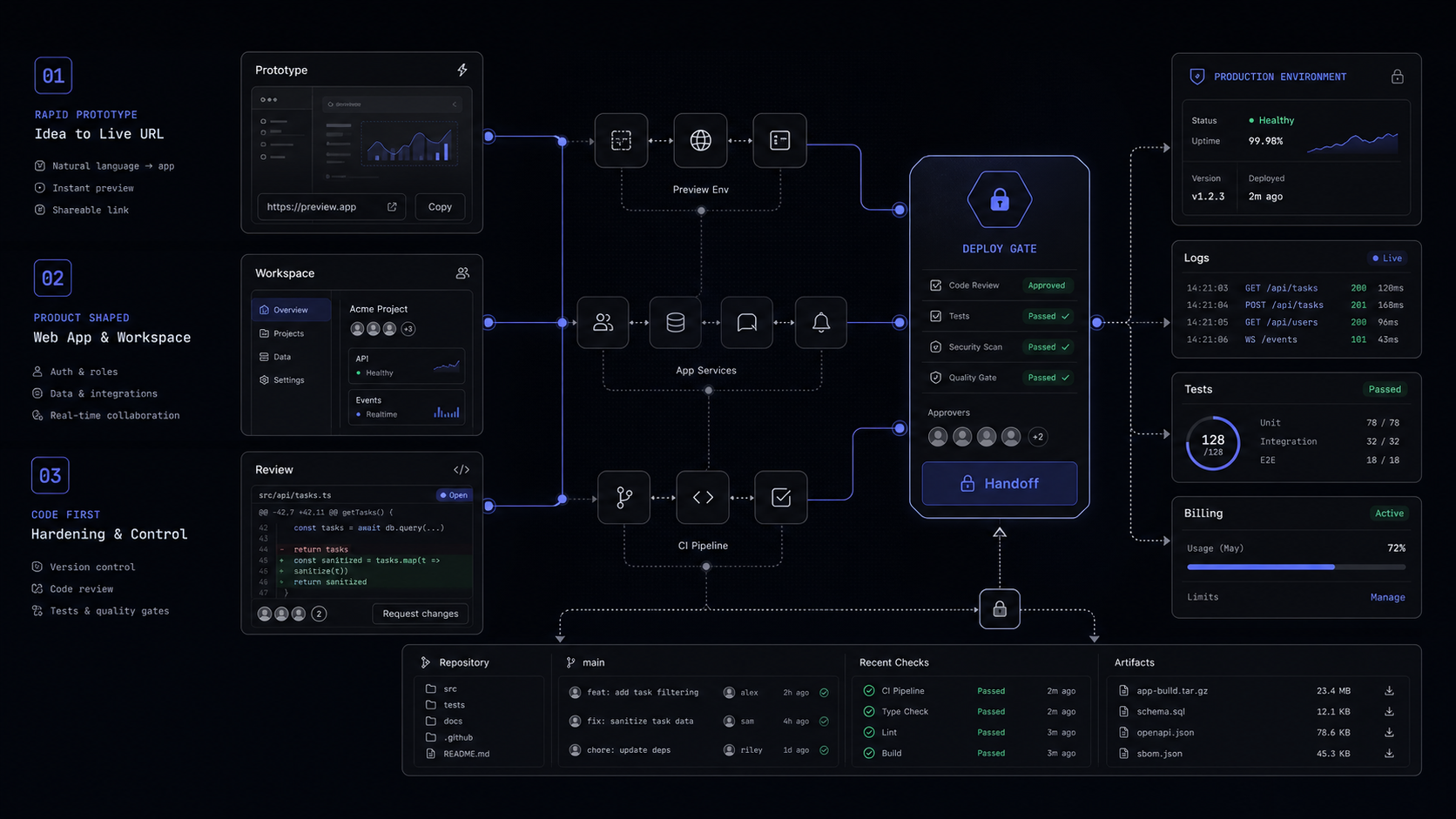
Use Replit when the fastest useful prototype matters, Lovable when the product needs a web-app shape and non-engineers in the workspace, and Cursor when a technical owner is ready to harden the code. The wrong move is treating any of them as a finished SaaS company in a box.
The Verdict: Pick By Handoff Risk, Not Demo Speed
Replit, Lovable, and Cursor solve different moments in the SaaS MVP path. Replit is the fastest path from prompt to live app when the stack is still unsettled. Lovable is the strongest fit when a founder, product lead, and designer need to shape a real web application together. Cursor is the right tool when the code is ready for a technical owner to inspect, refactor, test, and ship through a normal engineering workflow.
The decision is not "which AI builder is best." The decision is where your current risk sits.
The safest founder path is usually not a single tool. It is a staged workflow: prototype the narrowest working product in Replit or Lovable, then move the parts that survived user feedback into Cursor, a senior engineer's local stack, or a fixed-scope build process.
Replit Wins When The MVP Must Be Live Before The Stack Is Settled
Replit is the best choice when the immediate goal is a working, shareable prototype, not a final architecture. Replit Agent can set up the project, create the application, write code, set up infrastructure, test the result, and fix issues along the way. That makes it useful when a founder needs a live workflow to show an investor, a customer, or an internal decision-maker before hiring a full build team.

A good Replit MVP prompt is not "build my SaaS." It is a bounded workflow: "Build a customer onboarding tracker where an admin can create an account, add onboarding tasks, mark blockers, and share a read-only status page." That gives the Agent a concrete loop to build and gives you something specific to test.
Replit's current pricing supports that early validation pattern. The Starter plan is free and includes free daily Agent credits, a built-in database for full-stack apps, and publishing up to 1 project. Core is $25/month, or $20/month billed annually, with $25 of monthly credits, up to 5 collaborators, up to 2 agents in parallel, and regional publishing. Pro is $100/month, or $95/month billed annually, with $100 monthly credits, up to 15 collaborators, up to 50 viewers, up to 10 agents in parallel, and database rollbacks up to 28 days.

The catch is control. Replit says Agent is powered by large language models and is probabilistic, which means it may occasionally make mistakes. That is fine for a reference app. It is not fine as the only review layer before customer billing, production data, permissions, or integrations. Replit also pushes you toward the platform's chosen build and deployment path, which is exactly why it is fast.
Use Replit when the MVP question is "can this workflow exist and feel useful?" Move out of pure Replit mode when the question becomes "can this system hold customer data, payment events, and operational mistakes without drifting?"
Lovable Wins When The MVP Needs A Product Shape And A Shared Workspace
Lovable is the stronger choice when the MVP is less about proving that code can run and more about shaping the product surface. Lovable's documentation says it generates working applications with frontend, backend, database, authentication, and integrations, backed by editable code. That maps well to SaaS MVPs with onboarding, dashboard states, admin views, settings, and early customer workflows.

The useful difference is collaboration. Lovable projects live inside workspaces, pricing is workspace-level, and credits are shared across the workspace. The Free plan is $0/month with 5 daily credits up to 30 per month, workspace-private projects, unlimited collaborators, 5 lovable.app domains, and Cloud. Pro is $25/month on annual billing, shared across unlimited users, with 100 monthly credits, 5 daily credits up to 150 per month, usage-based Cloud + AI, custom domains, badge removal, and roles and permissions. Business is $50/month on annual billing, shared across unlimited users, with SSO, team workspace, internal publish, role-based access, and a security center.

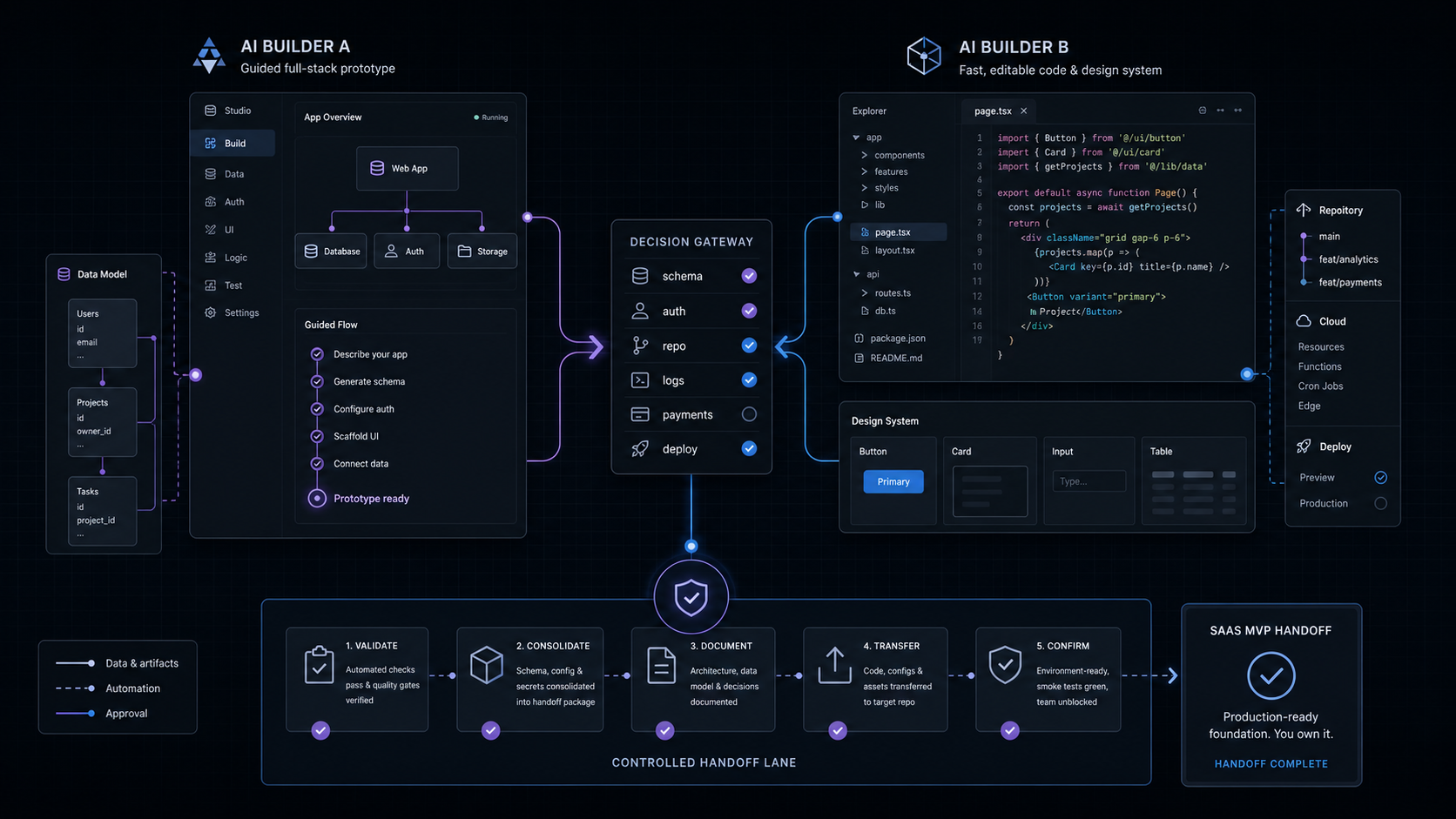
That makes Lovable a good fit for a founder who needs a product-shaped artifact, not just a coding experiment. A product lead can shape the onboarding flow. A designer can refine states. A commercial lead can review what the dashboard says to customers. Then the team can sync the codebase to GitHub and hand the working reference to the people responsible for production hardening.
The limit is that generated product shape is not the same as production readiness. Lovable can create the app skeleton, but a real SaaS MVP still needs reviewed data modeling, error handling, permissions, billing events, audit logs, and environment separation. Treat Lovable as a way to collapse product ambiguity, not as the only control system around a business application.
Use Lovable when the hard question is "what should the product be?" Move into a controlled build when the hard question becomes "how should this product behave under real users, edge cases, and support load?"
Cursor Wins When The Code Is Ready To Be Reviewed Like Real Software
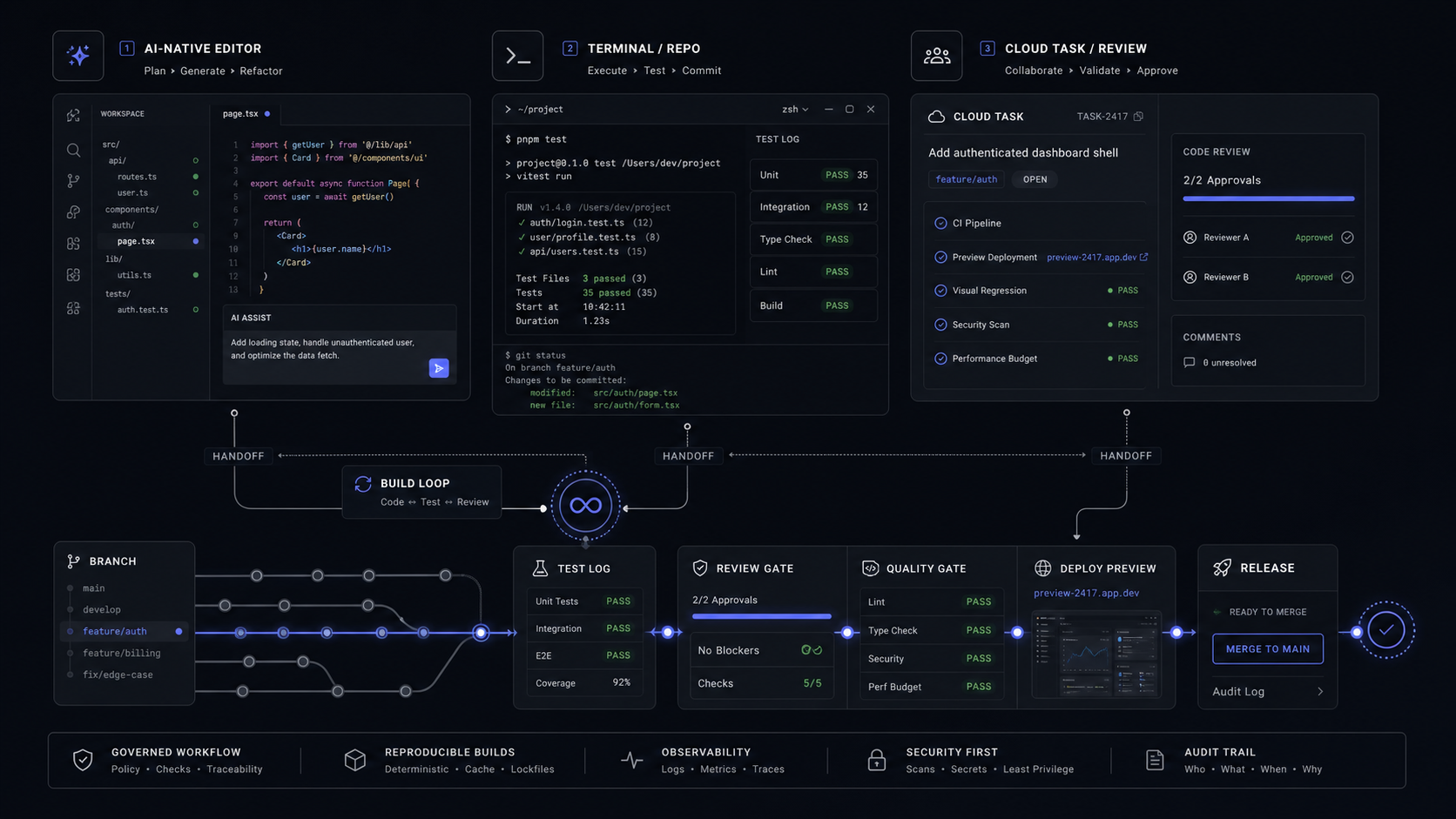
Cursor is the right choice when someone technical owns the code. Cursor's documentation describes it as a coding agent for understanding a codebase, planning and building features, fixing bugs, reviewing changes, and working with existing tools. That is a different job from Replit or Lovable. Cursor does not remove the need for engineering judgment; it speeds up the judgment loop.

For SaaS MVPs, Cursor is useful after the prototype has proven the workflow. A developer can use it to inspect the generated app, rewrite brittle state, add tests, split environment variables, set up payments, trace permission checks, and connect the repository to the deployment path. If your founder prototype came from Lovable, this is where GitHub sync becomes useful. If it came from Replit, this is where the working behavior becomes a spec for the production build.
Cursor's current buying path reflects that technical posture. Hobby is free with limited Agent requests and limited Tab completions. Individual Pro is $20/month and includes extended Agent limits, access to frontier models, MCPs, skills, hooks, cloud agents, and Bugbot on usage-based billing. Teams is $40/user/month and adds centralized billing, team administration, shared team context for cloud agents and automations, usage analytics, privacy mode, and SAML/OIDC SSO. Enterprise is custom and adds pooled usage, access controls, audit logs, service accounts, and priority support.

Cursor is not the right answer for a founder who cannot read code and has nobody reviewing the output. It can produce changes quickly, but speed without review just moves risk into the repository. The production value comes from pairing the tool with tests, pull requests, logs, acceptance criteria, and a technical owner who can say no.
Use Cursor when the MVP question is "can we make this reliable enough to sell?" Skip Cursor as the first tool when the team has not yet settled the user workflow and no one can evaluate the code it changes.
The Price Table: Do Not Compare Sticker Price Alone
The cheapest plan is not the cheapest MVP path. Subscription price matters, but the bigger cost is who owns credits, collaboration, deployment, review, and rework.
The practical math is simple. If the product is still unclear, paying for Replit or Lovable can be rational because they compress ambiguity into a visible app. If the product is clear and the risk is reliability, paying for Cursor without a technical owner is usually false economy. You still need someone to review the code, test edge cases, and decide what should be rebuilt instead of patched.
For a fixed-scope SaaS MVP, we would not choose the tool by monthly price alone. We would choose by the next expensive unknown:
- If the unknown is whether users understand the workflow, use Lovable or Replit.
- If the unknown is whether the workflow can survive customer data, payments, and permissions, use Cursor inside a reviewed build path.
- If both are unknown, keep the prototype narrow and do not start by building the full SaaS surface.
This is where the existing tool comparisons matter. If your shortlist is still Lovable versus Bolt, use the Lovable vs Bolt SaaS MVP comparison to narrow the app-builder side. If your engineering lead is choosing a coding-agent setup, pair this with the Claude Code vs Cursor vs Codex SaaS MVP comparison.
The Founder Handoff Path That Actually Works
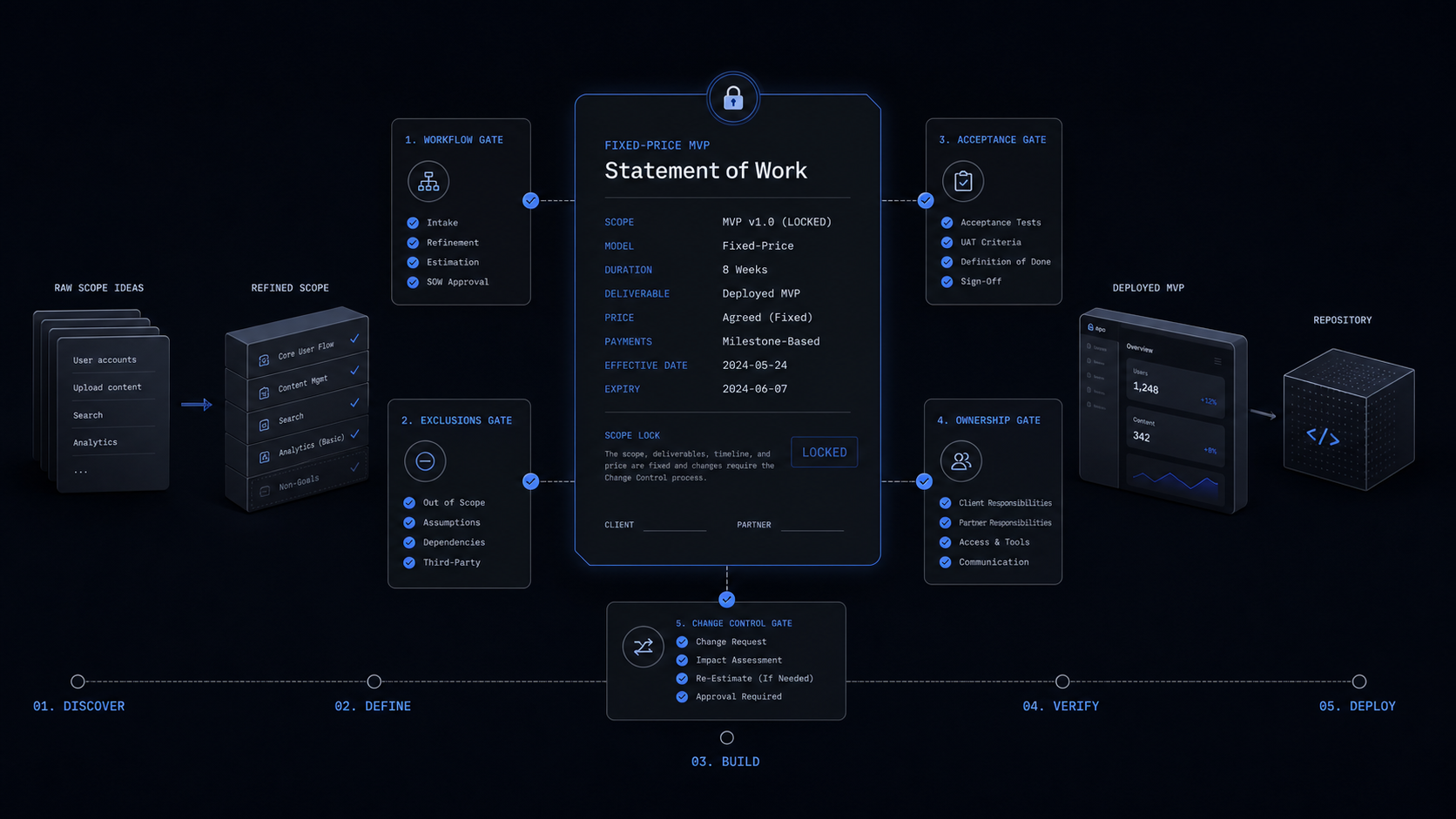
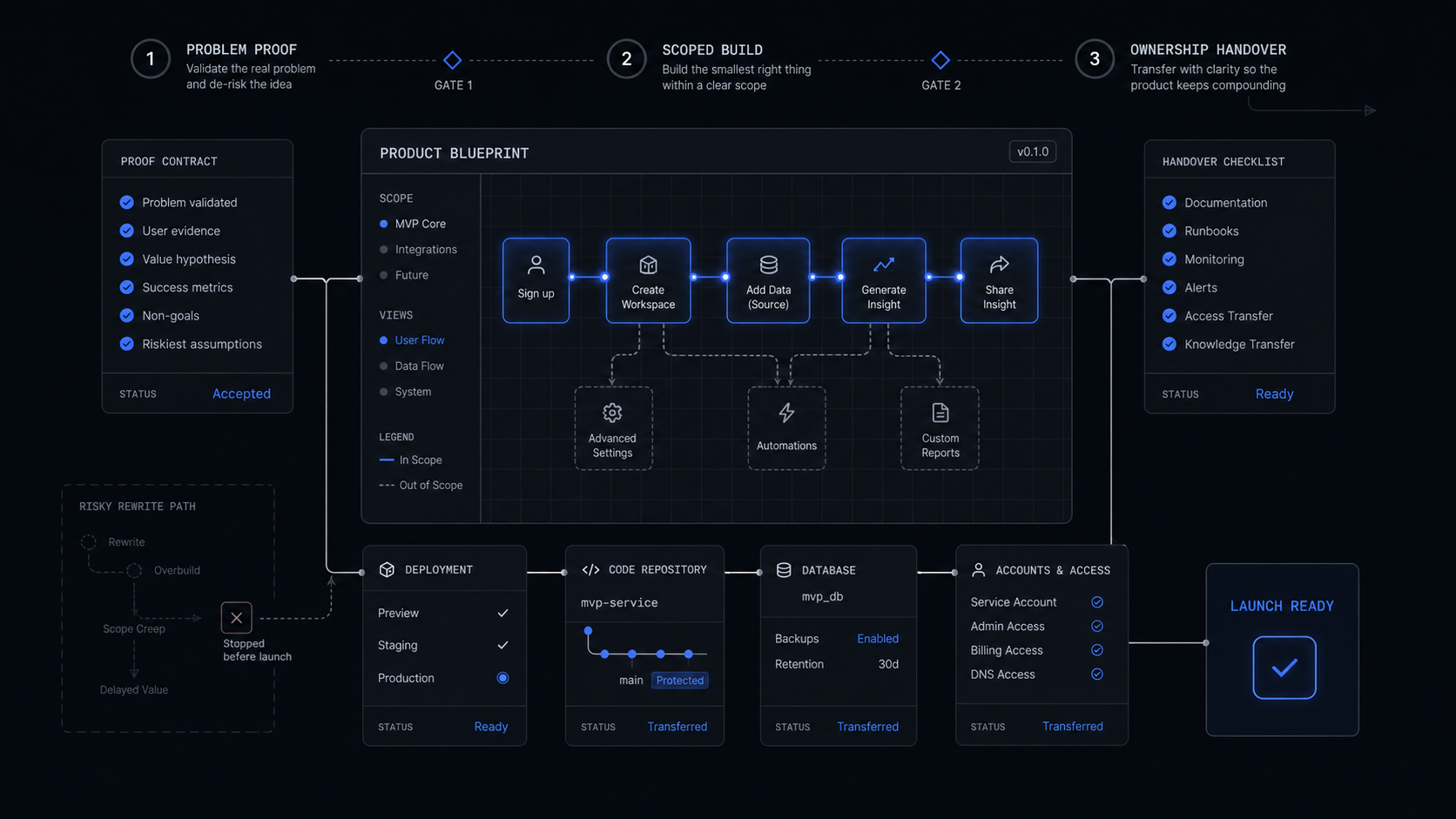
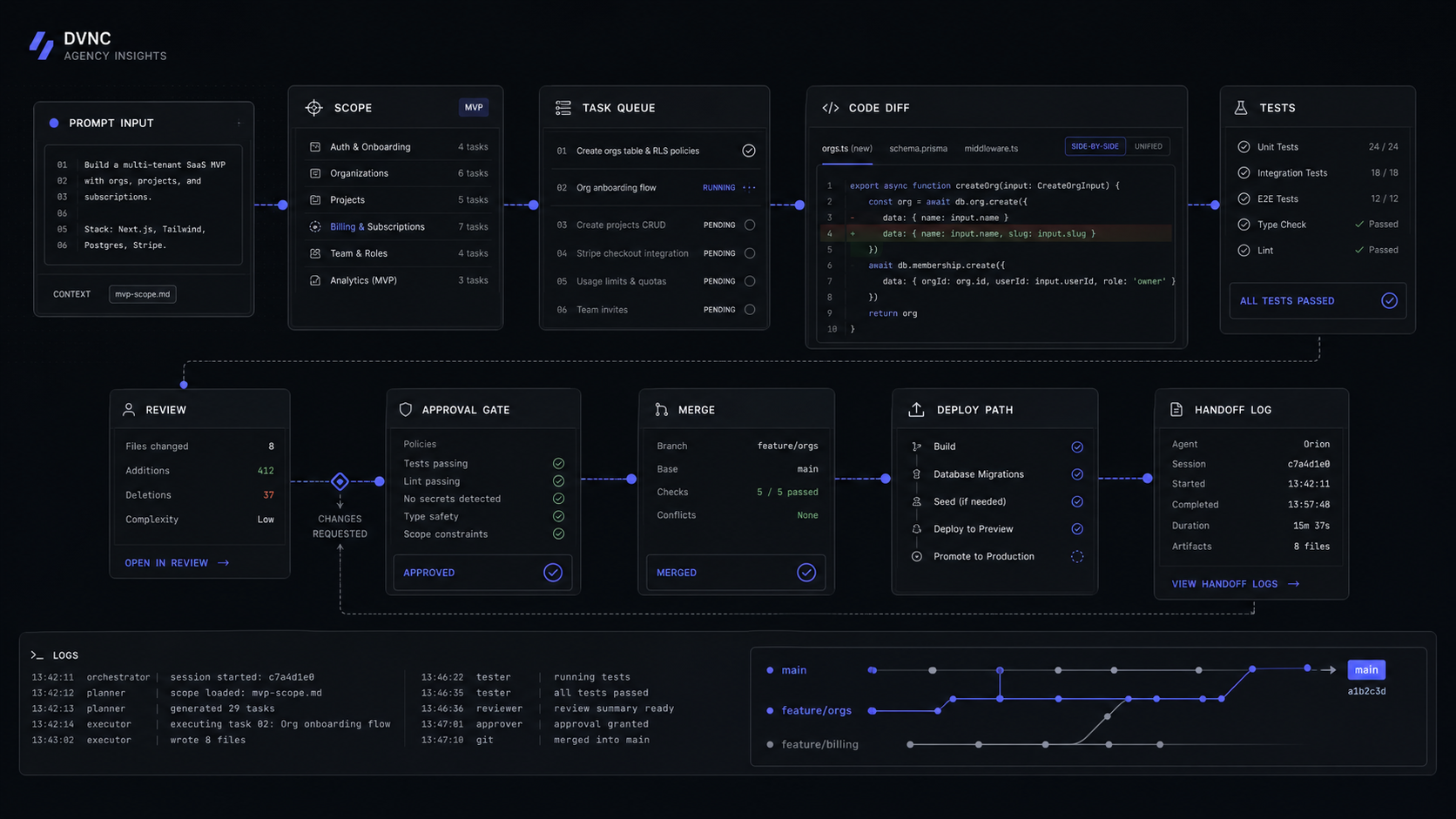
The best path is prototype, freeze, harden, then hand over. Most failed AI-built MVPs do not fail because the first demo was weak. They fail because the team keeps asking the prototype tool to absorb production requirements it was never scoped to control.
Define the core workflow
Write the workflow as a buyer action, not a feature list. "A customer submits a request, the system scores it, an admin approves it, and the customer sees status" is buildable. "AI-powered customer success platform" is not.
Build the fastest useful prototype
Use Replit if you need a live URL and a quick operating loop. Use Lovable if product shape, workspace collaboration, and GitHub handoff matter more than pure speed.
Freeze what survived feedback
Do not keep adding screens because the AI can generate them. Freeze the workflow, states, roles, data objects, and failure cases that real users cared about.
Move into reviewed production work
Bring the surviving scope into Cursor, a senior developer workflow, or a fixed-scope MVP build. Add tests, permissions, billing events, observability, environment separation, and handoff notes before customers depend on it.
Cut the parts that were only demo theater
Delete features that made the prototype look impressive but did not reduce buyer risk. A smaller controlled system is easier to sell, support, and extend.
FAQ
Which one is better, Lovable or Replit?
Lovable is better when the MVP needs a polished web-app shape, workspace collaboration, custom domains, and a GitHub handoff. Replit is better when the founder needs the fastest path to a working, live prototype with less setup.
Is Cursor AI better than Replit?
Cursor is better for technical production work inside a real codebase. Replit is better for zero-setup app generation, early validation, and getting a simple app live before the stack is settled.
Is Cursor AI better than Lovable?
Cursor is stronger once a developer needs to inspect, refactor, test, and ship code. Lovable is stronger before that point, when the team is still shaping the product surface and needs non-engineers to collaborate.
What are the downsides of Replit?
Replit's downside is not speed. It is control. Agent output is probabilistic, credit usage matters, and a live prototype still needs review before it handles customer data, billing, permissions, or reliability-sensitive workflows.
Scope Your AI SaaS MVP
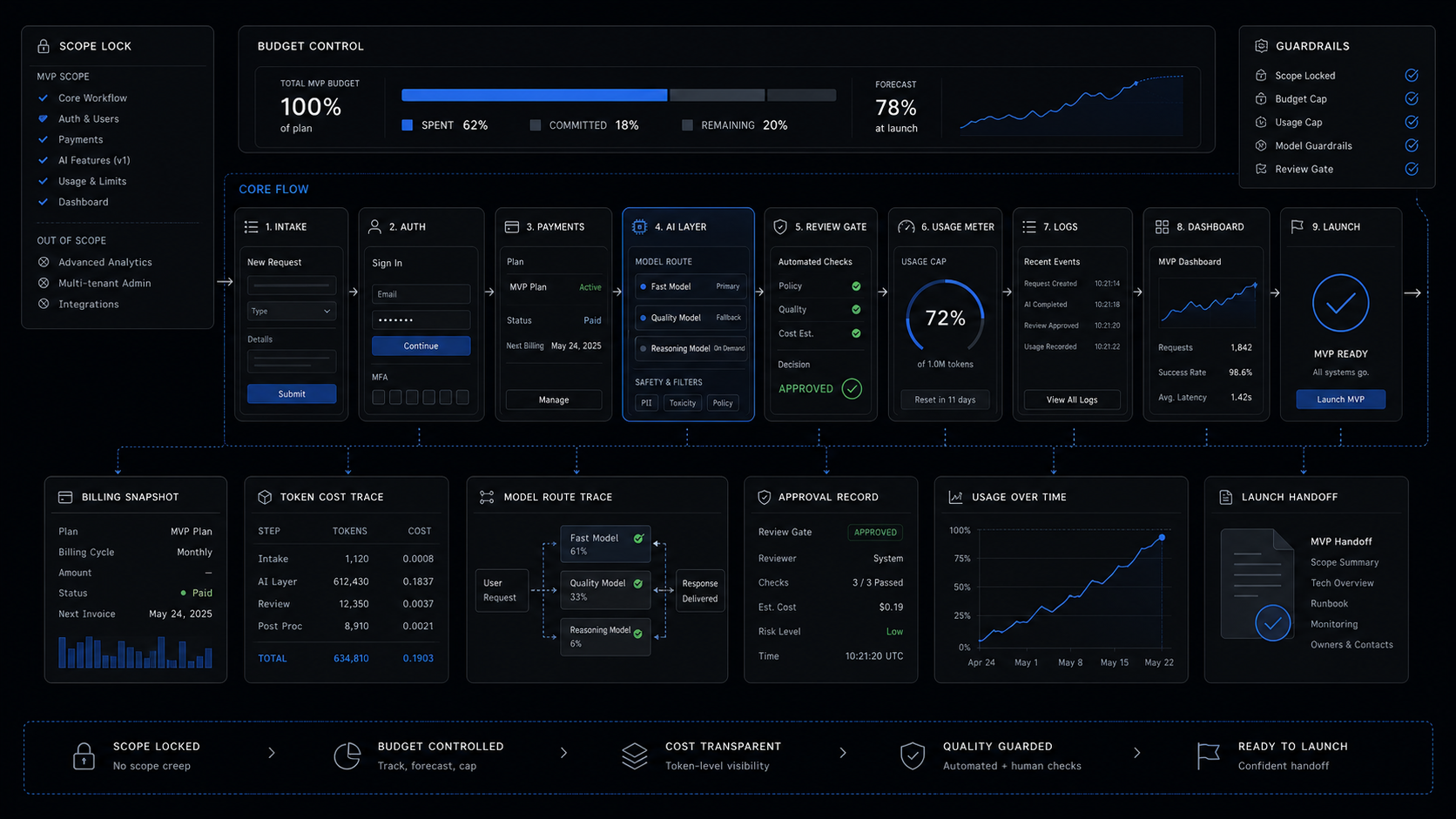
Turn the validated workflow into a controlled fixed-scope SaaS MVP with auth, payments, dashboard, AI layer, logs, and handoff.
Jun 10, 2026