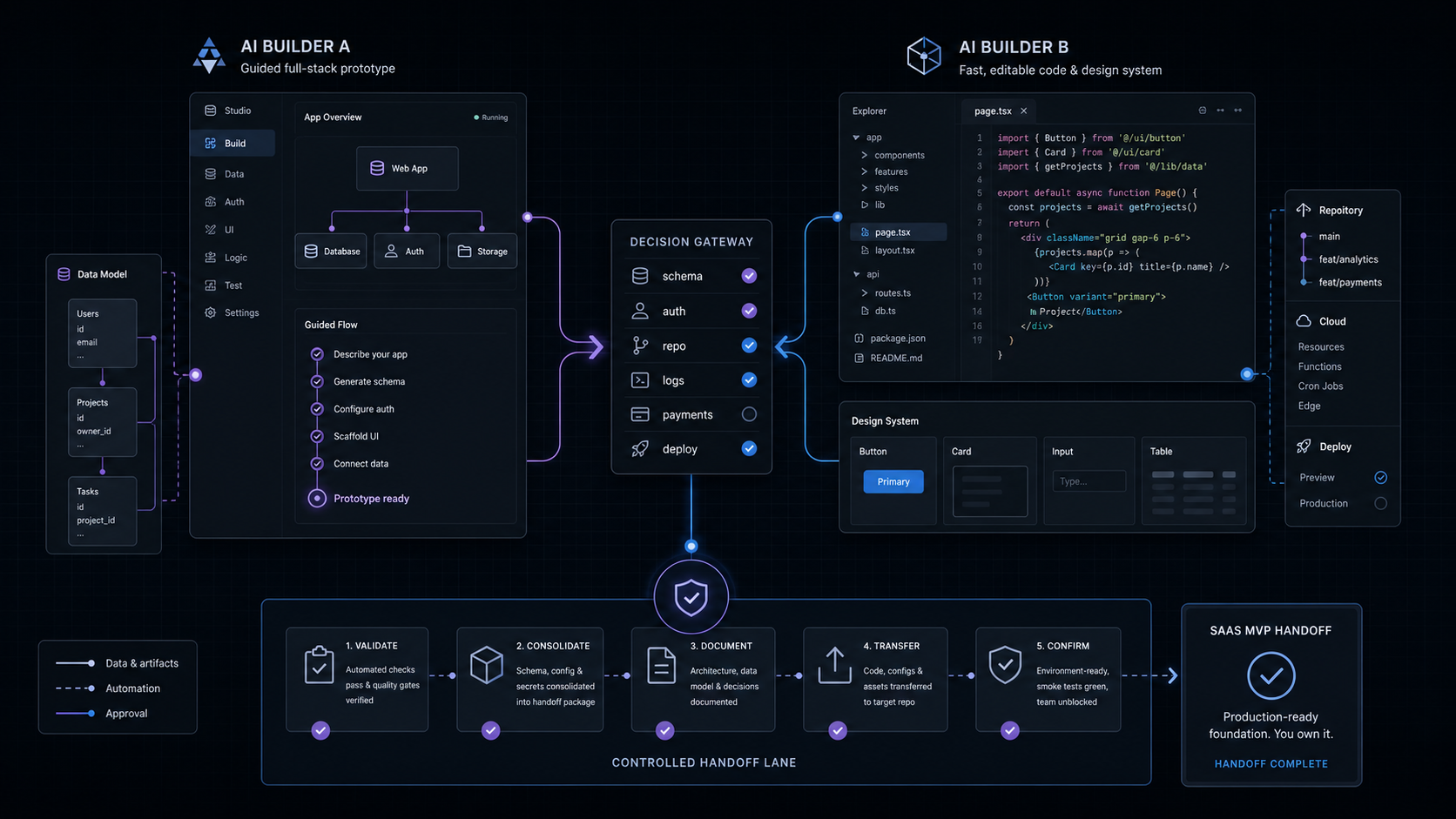
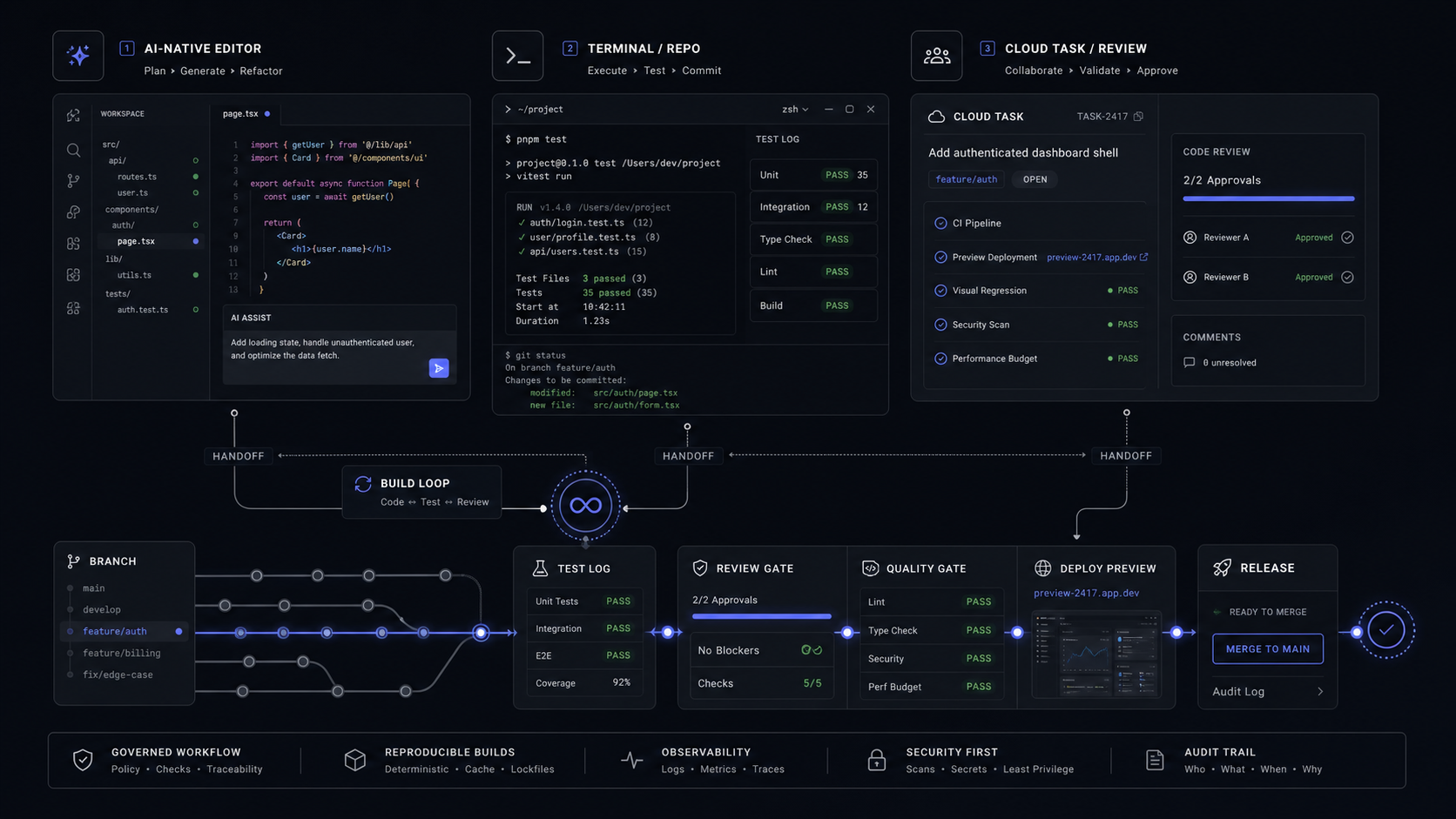
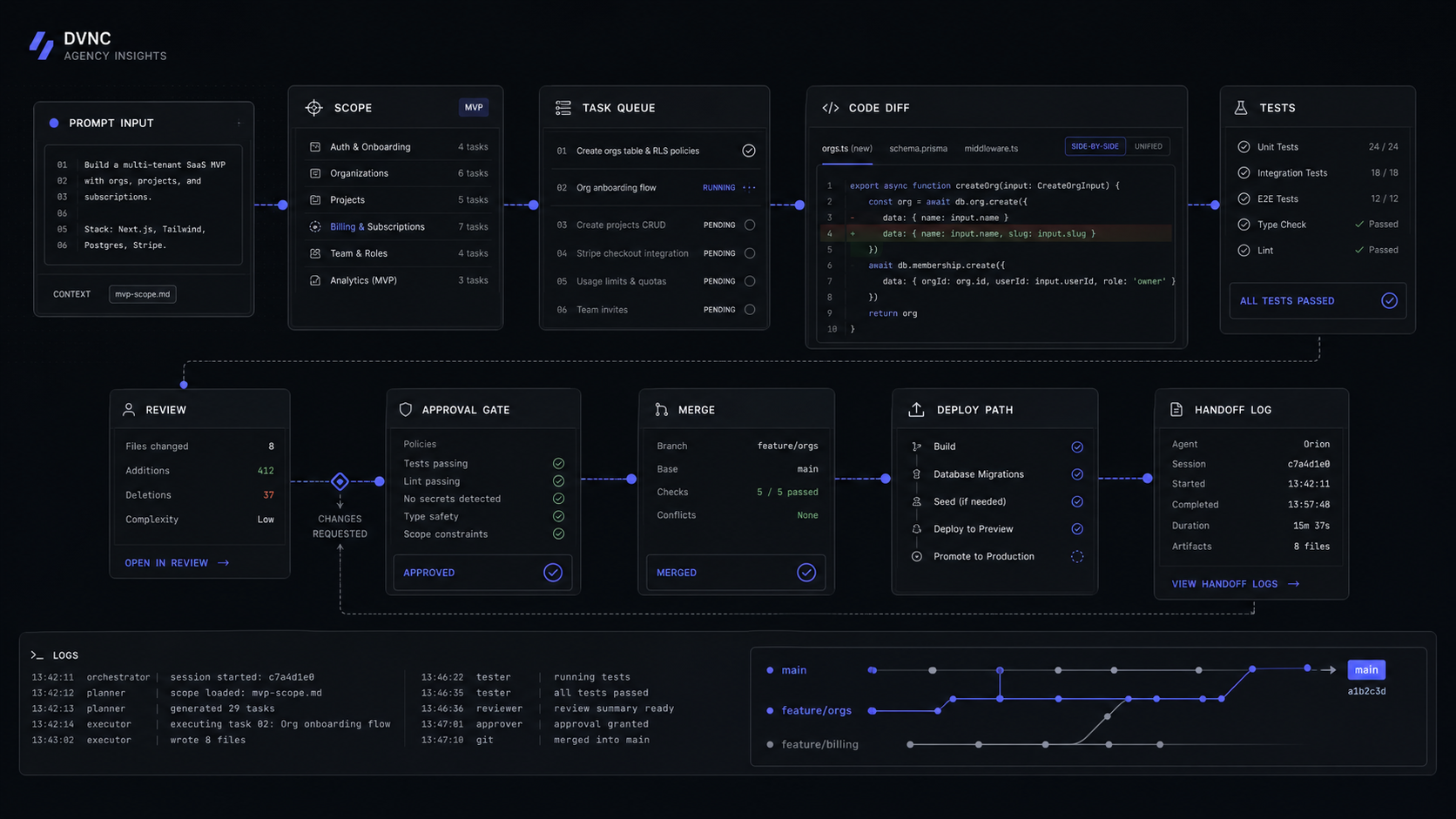
AI App Development Cost: The Fixed-Scope MVP Budget
What an AI app MVP should cost, what belongs in scope, and where founders overspend when they skip logs, usage limits, and human review.

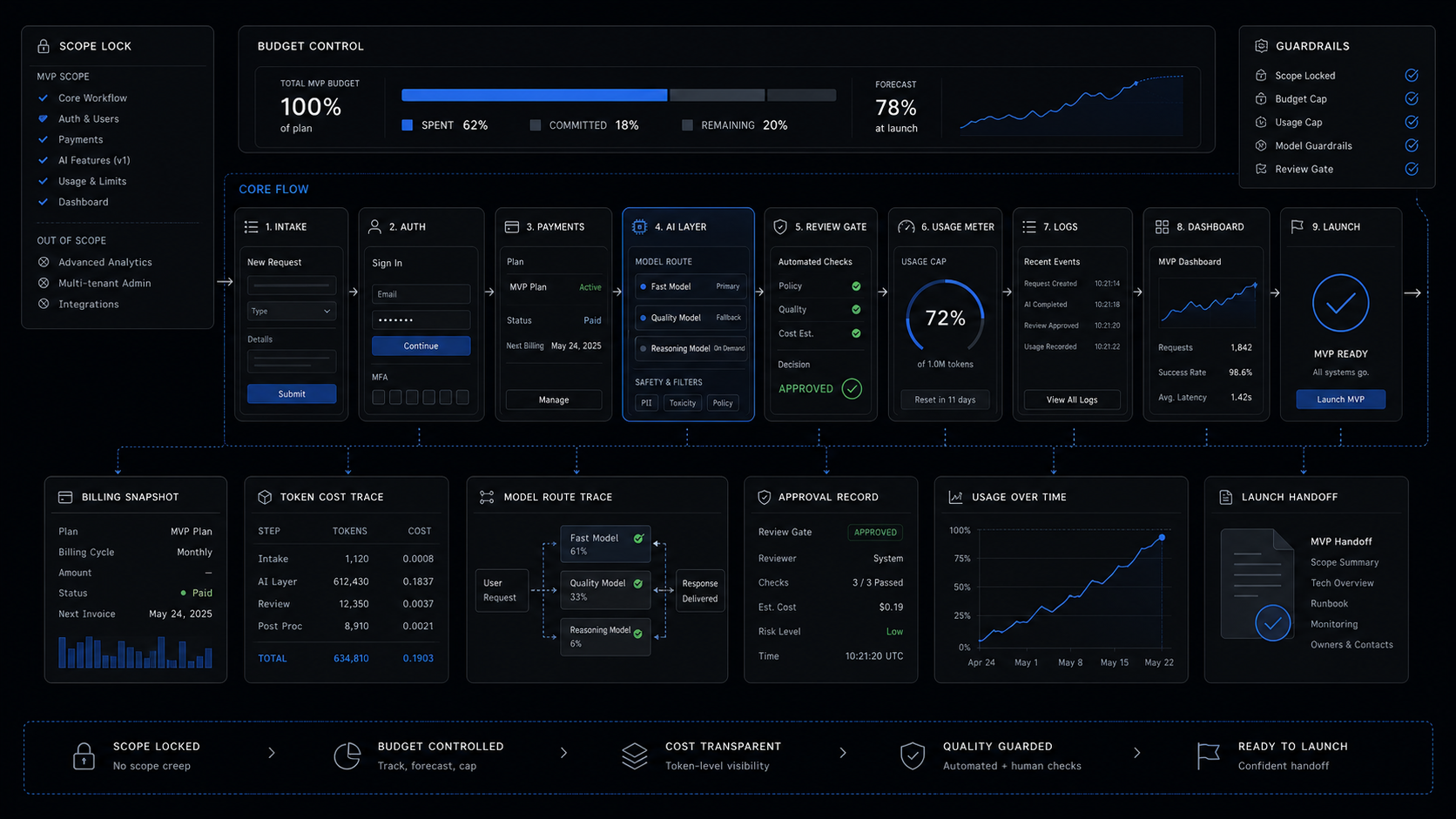
An AI app MVP should be priced around one validated workflow, not around a vague plan to "add AI." If the first build includes auth, payments, one core flow, one AI layer, logs, usage limits, and human review, the budget becomes controllable. If it starts with custom model training, two platforms, and a long feature list, the number stops being an MVP budget.
The Short Verdict
The right AI app development cost is the smallest budget that can prove a paid workflow with real users, real data, and controlled AI behavior. For a funded founder, that usually means a fixed-scope SaaS MVP, not a research project and not a throwaway prototype.
Public app-build benchmarks are wide because they mix prototypes, mobile apps, enterprise systems, and custom AI infrastructure. Business of Apps puts simple app development at $5,000-$50,000, medium-complexity apps at $50,000-$120,000, and complex apps at $120,000-$300,000. AI-specific agency ranges are wider: Appinventiv puts intelligent app development at $40,000-$300,000 or more, and CMARIX puts AI app estimates from $30,000 to over $500,000.
Those ranges are useful only after you decide what kind of build you are buying. A prompt wrapper with no payments and no operating controls should not be priced like a SaaS MVP. A custom model with data collection, labeling, training, and compliance is not an MVP unless the model itself is the product. The first commercial build should sit between those extremes.
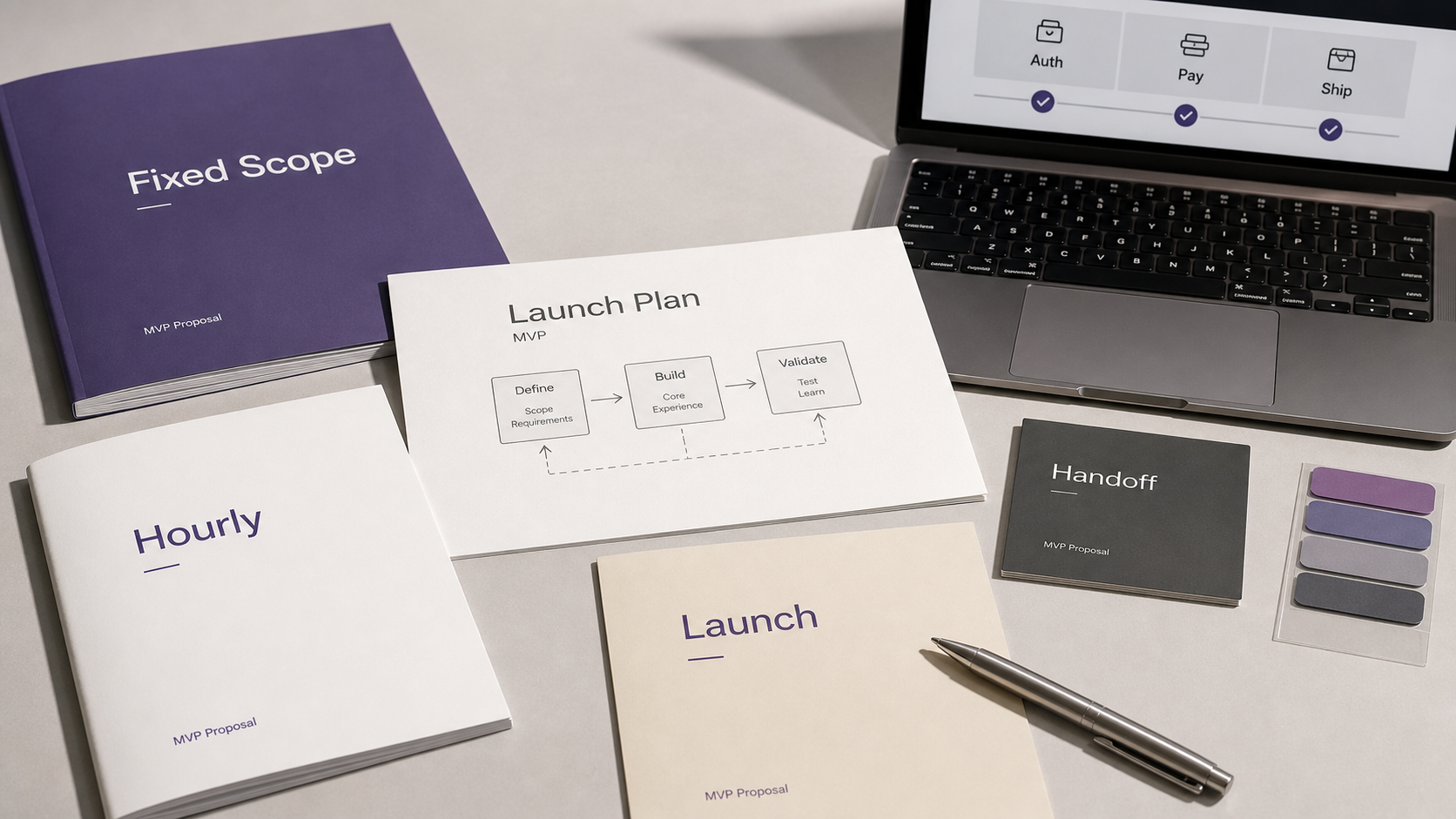
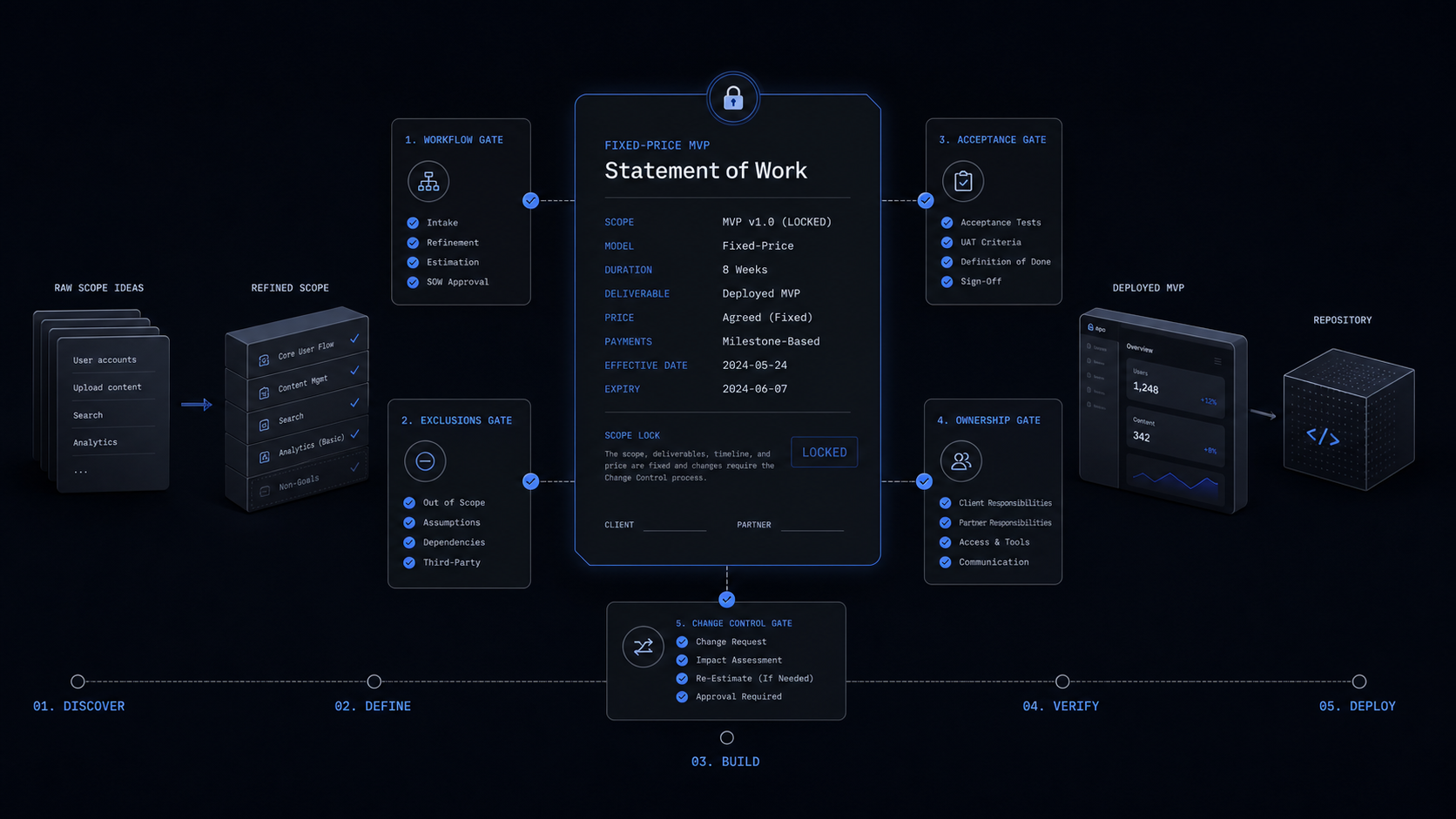
DVNC's fixed-price SaaS MVP band is $45K-$120K over 6-12 weeks, and the scope is deliberately narrow: a working SaaS product with auth, payments, and one core flow. That is the useful anchor for this decision. If your first AI app cannot be explained as one core workflow with one buyer outcome, the cost problem is the scope, not the hourly rate.
The Budget Range That Matters
A realistic AI app MVP budget has three layers: product build, AI runtime, and post-launch maintenance. If a quote collapses those into one number, ask for the split before comparing vendors.
The table matters because "AI app" is not a scope. A simple app benchmark can be right for a lead magnet, an internal calculator, or a narrow assistant. A SaaS MVP budget is justified only when the product must handle accounts, billing, state, user permissions, AI usage, error handling, and a launch process. A custom AI-solution budget is justified when the system needs custom data preparation, model training, heavy infrastructure, or regulated deployment.
Business of Apps also gives a useful timing check: simple apps can take 2-4 months, mid-complexity apps 4-6 months, and complex apps 9 months to a year. If someone quotes a complete AI SaaS MVP on a schedule that ignores that build reality, inspect what is missing. The missing pieces are usually tests, payments, admin tools, review queues, production deployment, or handoff documentation.
For a founder trying to decide whether to fund the build, the practical question is not "what does an AI app cost?" It is "what must be true before we spend beyond the MVP?" The answer should fit on one page: one target user, one job, one workflow, one AI behavior to evaluate, one revenue event, and one operating metric.
What Belongs In The First Build
The first build should prove the paid workflow and the operating model. It does not need every feature the company will eventually sell.
A clean AI SaaS MVP includes these parts:
- Discovery and scope lock: the decision that the first workflow exists, has a buyer, and can be validated without building the whole company.
- One core workflow: the sequence a user completes to get value, such as intake to draft, upload to analysis, brief to proposal, ticket to resolution, or dataset to report.
- Auth and roles: enough account structure to separate users, admins, and reviewers.
- Payments: included when the product needs revenue validation, plans, trials, usage gates, or subscription state.
- One AI layer: a bounded model call, retrieval step, classifier, extractor, generator, or assistant that supports the workflow.
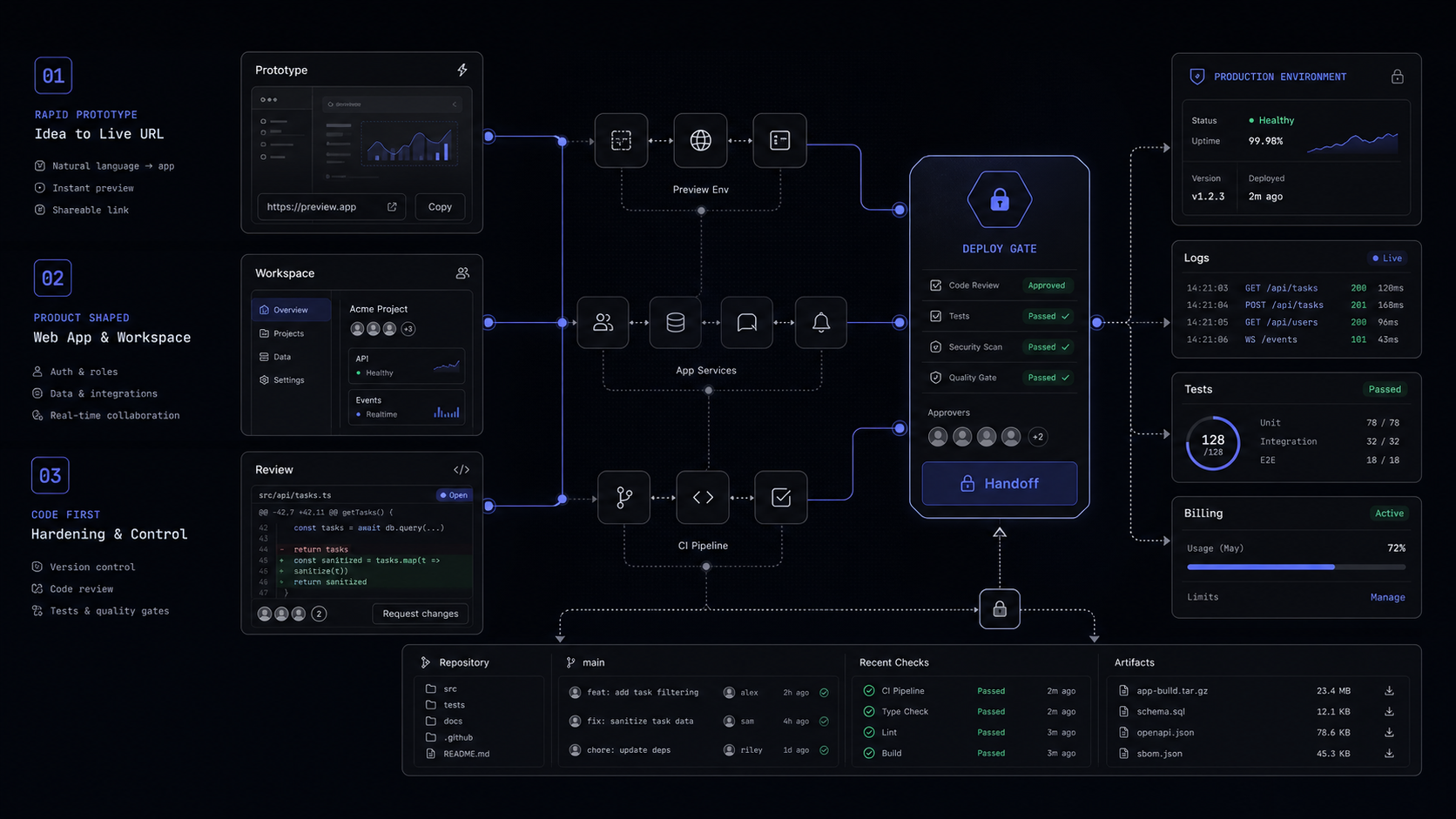
- Logs and evaluation examples: a record of prompts, model choices, inputs, outputs, review state, and known failure examples.
- Human review: approval, escalation, or edit states for outputs that can affect money, customer trust, legal risk, or brand.
- Dashboard or admin view: a compact surface for usage, errors, accounts, submissions, and operational review.
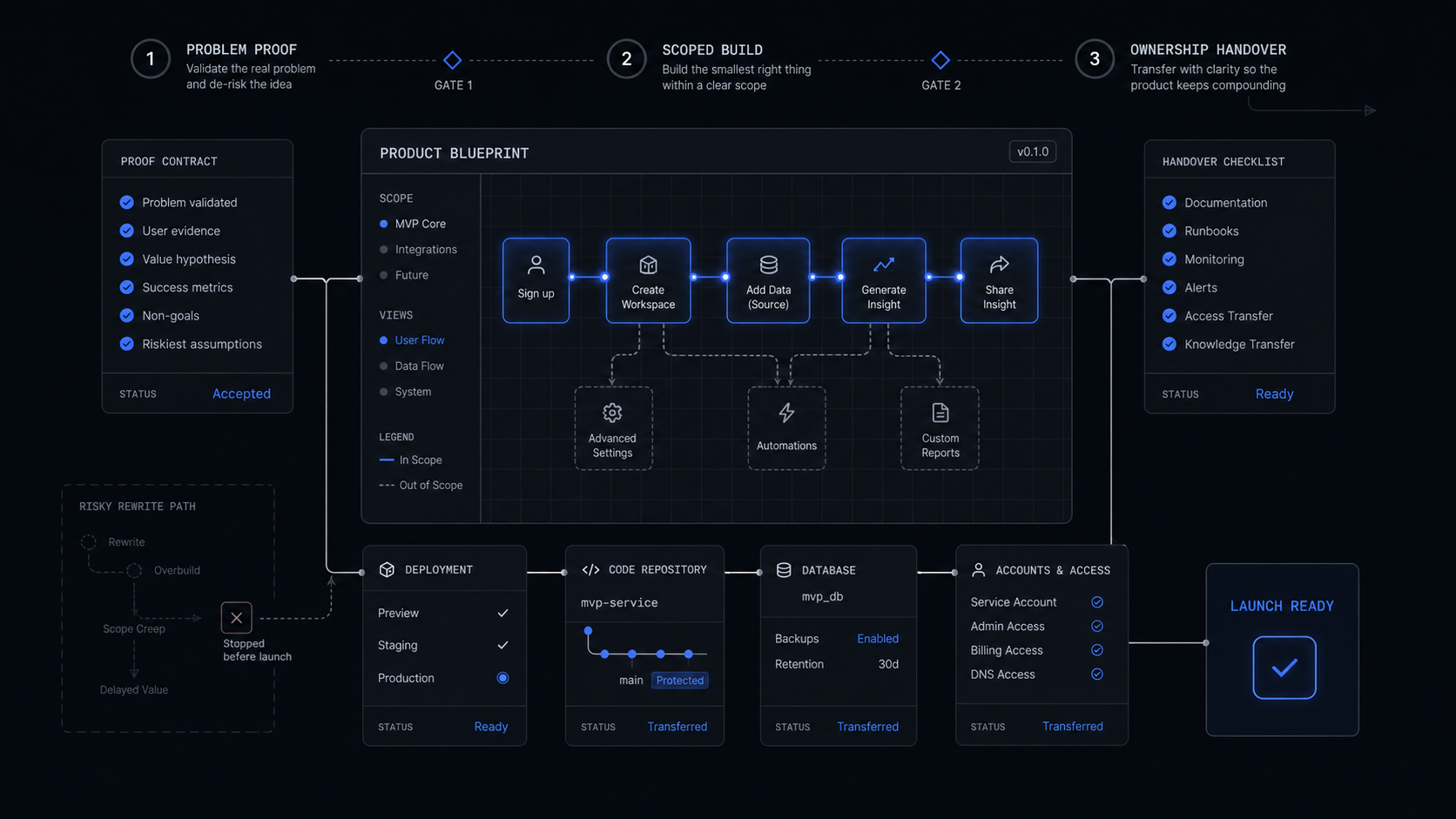
- Deployment and handoff: hosting, environment variables, access notes, monitoring basics, and a readable explanation of how the system works.
That list is intentionally plain. Buyers often overspend because they treat AI as the whole product. In an MVP, AI is one part of the value chain. The user still needs to sign in, submit the right data, understand the output, correct errors, pay, return later, and trust the system enough to use it again.
Use this worked example. A founder wants an AI app that turns customer discovery notes into a prioritized product roadmap. The version-one build should not include mobile apps, real-time collaboration, company-wide permissioning, custom model training, and ten export formats. It should include:
Capture the input
A web form or upload flow collects interview notes, customer segments, product goals, and constraints. The app stores the raw input and marks whether the data is safe to send to the AI layer.
Run one AI workflow
The AI layer extracts problems, groups themes, scores evidence strength, and drafts a roadmap table. The prompt, model, input, output, and cost metadata are logged.
Force review before reuse
The founder reviews the draft, edits weak recommendations, flags bad outputs, and approves the final roadmap. The system does not treat model output as truth until a human accepts it.
Validate payment or retention
Payments, trial gates, or usage limits prove whether users will pay for the workflow. The MVP tracks activation, completed roadmaps, review edits, and repeat usage.
That is enough to learn whether the product is worth extending. A second platform, team workspace, custom analytics suite, and enterprise permission model can wait until the core workflow earns them.
For a broader version-one checklist, use our related guide on what fixed-price AI SaaS MVP development services should include. This cost guide is the buying lens; that piece is the scope checklist.
What To Cut Before It Inflates The Budget
The fastest way to control AI app development cost is to remove the work that does not prove the paid workflow. Most inflated MVP quotes come from five choices.
Cut custom model training unless the model is the product. Coherent Solutions notes that data collection and preparation can account for 15-25% of total AI cost, and estimates a high-quality training dataset at $10,000-$90,000 depending on the data and annotation complexity. That can be valid for a defensible ML product. It is usually wrong for a first SaaS MVP that can use existing models and evaluate outputs against real user examples.
Cut the second platform. Web first is usually enough for an early B2B SaaS MVP. Native iOS and Android can make sense when the product depends on camera, location, sensors, offline usage, or mobile push behavior. If the user can complete the workflow in a browser, keep the first build web-based and spend the budget on reliability.
Cut broad integrations. Appinventiv estimates a simple API integration at about $5,000 and complex or numerous third-party integrations at up to $20,000 or more. The first integration should be the one that proves the workflow, not the full customer's future stack.
Cut advanced admin before you cut logs. Founders sometimes remove the operating layer because dashboards feel less exciting than user features. That is backwards. A simple admin surface that shows accounts, submissions, errors, AI calls, review state, and usage cost is not decoration. It is how the team learns what broke and what users actually did.
Cut vague personalization. "Personalized AI" can mean anything from inserting a user's role into a prompt to building a retrieval system over a proprietary data set. The first build needs the smallest personalization that changes the outcome. If that means three structured fields and five approved examples, start there.
The one place we do not cut is control. The MVP should know what model ran, what it received, what it returned, how much it cost, who approved it, and when it failed. If an agent-heavy build is the real scope, read AI Agent Build Cost in 2026 before treating it as a normal app estimate.
The Runtime Cost Line Buyers Miss
AI runtime cost should be designed into the product before launch. It is not just a billing detail.
OpenAI's pricing page shows why. GPT-5.5 standard pricing is $5.00 per 1M input tokens, $0.50 per 1M cached input tokens, and $30.00 per 1M output tokens. GPT-5.4 mini is $0.75 per 1M input tokens, $0.075 per 1M cached input tokens, and $4.50 per 1M output tokens. OpenAI also notes that the Batch API saves 50% on inputs and outputs for asynchronous work over 24 hours.
The exact model may change before your product scales. The design rule does not: every AI app needs metering, model selection, and budget controls in the first build. Otherwise a successful launch can become a cost problem.
Here is the minimum runtime-cost control set:
- Track input tokens, output tokens, cached tokens, model, route, user, account, and workflow step.
- Store enough prompt and output metadata to debug failures without exposing sensitive data unnecessarily.
- Set per-user, per-account, and per-workflow usage limits.
- Add a fallback model for low-risk tasks where a smaller model is good enough.
- Cache repeated context and reference data.
- Send long-running batch work through slower cheaper paths when users do not need instant output.
- Show admins the cost per successful workflow, not just total API spend.
OpenAI says API usage is billed separately from ChatGPT subscriptions, and monthly budgets can be set in billing settings, but enforcement may be delayed and overages remain the user's responsibility. That means your app should not rely on the provider bill alone. It should have product-level limits, warnings, and kill switches.
A good MVP budget includes this work because it protects the business model. If the product charges a low monthly subscription and a power user can run more model cost than the subscription covers, the pricing is broken. If the product charges by project but one project can contain unlimited files, the workflow needs size limits. If a support feature calls a large model for every low-risk classification, the model route is too expensive.
A Practical Scoping Sequence
Scope the AI app in this order: decision, workflow, operating controls, launch boundary. Do not start with screens.
1. Name the decision. The MVP exists to answer one commercial question. Examples: will sales teams pay to turn call notes into proposals, will support leads trust AI triage with human handoff, will founders pay for roadmap generation from interviews, will agencies pay for AI-assisted brief production. If the decision is fuzzy, the budget will be too.
2. Map the workflow. Write the workflow as a numbered path from user input to accepted output. Include the boring states: empty input, bad file, failed model call, duplicate submission, refund, canceled subscription, reviewer rejection, export, and admin correction. These are not edge cases after launch. They are where AI products earn or lose trust.
3. Define the AI contract. The AI layer needs a job description, allowed inputs, forbidden claims, output schema, confidence or review state, and fallback behavior. A bounded contract is cheaper to build and easier to test than a general assistant.
4. Price the operating layer. Business of Apps breaks a mobile app budget into discovery at 10-15%, design at 20-25%, development at 40-55%, testing at 15-20%, and deployment at 5-10%. An AI MVP should make testing and deployment visible, not hide them under "development." The operating layer includes evaluations, review queues, usage logs, monitoring, and handoff docs.
5. Put maintenance in the model. Appinventiv estimates annual maintenance at 15-25% of the original development cost. CMARIX gives an ongoing maintenance and updates range of $15,000-$80,000 per year. Whether your actual number is lower or higher, it should be planned. AI apps need prompt updates, model-route changes, bug fixes, product analytics, and review of failed outputs.
6. Lock the launch boundary. A launchable MVP needs a definition of done. Use a plain checklist:
- One target user can complete the core workflow without help.
- Payment, trial, or access state works end to end if monetization is part of the test.
- Every AI call is logged with model, input class, output class, route, and cost metadata.
- High-risk outputs require review before they are sent, published, or acted on.
- The admin can see errors, usage, accounts, and review state.
- The system has a handoff document a new engineer can read.
- The team knows what metric decides the next build.
That is enough to compare quotes. A cheaper quote that removes logs, tests, payments, or handoff is not cheaper. It is a deferred bill.
FAQ
How much does it cost to develop AI?
For a launchable AI app MVP built on existing models, the useful buying range is closer to a fixed product build than a custom AI research program. Public app benchmarks run from $5,000-$50,000 for simple apps to $120,000-$300,000 for complex apps, while AI-specific estimates commonly run from about $30,000-$40,000 into $300,000-$500,000+ when the scope becomes enterprise-grade.
Can ChatGPT build an app?
ChatGPT can help generate code, copy, tests, schemas, and product ideas, but it does not remove the need for architecture, auth, payments, deployment, security review, logs, QA, and handoff. For a funded product, the important question is not whether AI can produce code. It is whether the finished system can be operated and trusted.
How much does AI cost per month?
Monthly AI cost depends on model choice, token volume, media usage, tool calls, caching, and how often users repeat expensive workflows. The MVP should track usage per user, account, workflow, and model so pricing decisions are based on cost per successful outcome, not a surprise provider bill.
Should an AI MVP include payments?
Include payments when revenue validation is part of the decision. Skip payments only when the first test is about workflow trust, internal adoption, or a closed pilot where commercial terms are handled manually.
Scope Your AI SaaS MVP
Turn one core workflow into a fixed-price SaaS MVP with auth, payments, one AI layer, logs, review controls, and a launchable product.
Jun 8, 2026