SaaS Website Design Agency: What to Scope Before You Launch
A buyer-grade launch-site scope for SaaS founders choosing an agency: pages, copy, CMS, analytics, performance, handoff, and what to cut from v1.

A SaaS website design agency is worth hiring when the launch site is a conversion system, not a portfolio refresh. Scope the pages, proof, CMS, analytics, performance targets, and handoff before you compare visual styles or day rates.
Choose the buying path before you judge the portfolio
The right SaaS website partner depends on what the site has to prove at launch. If you only need a temporary waitlist page, a template or freelancer can be enough. If the site must explain a new product, support demo requests, publish product content, and survive investor or customer scrutiny, buy a scoped launch site with copy, CMS, analytics, performance, and handoff included.
That choice matters because a SaaS website is not a normal brochure site. It has to show the product workflow, route buyers to the right action, explain pricing or packaging, answer trust objections, and give sales a link they can confidently send after the first call.
The clean buying move is to name the job before you name the tool. A founder launching an AI workflow product does not need a design award in v1. They need a site that makes one buyer understand the workflow, believe the product is credible, and take the next step without a sales explanation.
The first scope is five launch surfaces, not every page you can imagine
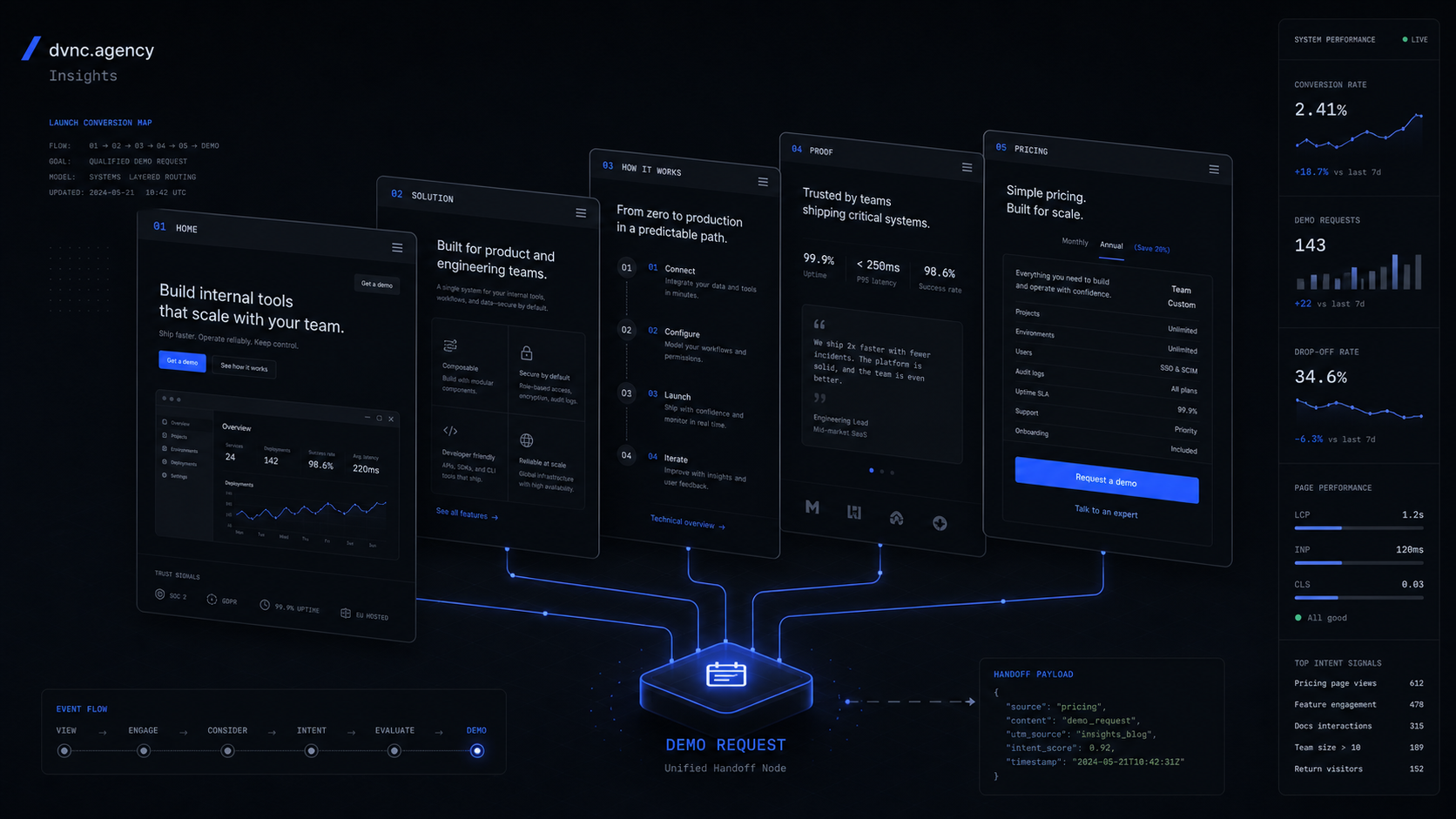
The v1 launch site should cover the fewest surfaces that can create buyer confidence. Start with five: homepage, product or use-case page, pricing or packaging page, proof surface, and conversion handoff.
The homepage carries the sharpest product promise and the first conversion route. The product or use-case page explains what the product does in the buyer's workflow. The pricing or packaging page does not have to expose every price, but it should explain how the offer is bought, scoped, or requested. The proof surface can be a customer page, security page, founder credibility section, demo walkthrough, or reference architecture, depending on what the buyer doubts. The conversion handoff is the demo request, signup, calendar, contact, or application path.
For a founder launching a workflow SaaS, that might become:
This is where many agency proposals drift. They sell a 12-page sitemap because it looks thorough, then the team spends launch week debating pages nobody needs. A better proposal says what each page must make the buyer do, what content is needed to build it, and what is explicitly out of scope.
If the site platform choice is still open, use the existing Framer vs Webflow product-site decision rule before design starts. Framer is often the faster route for polished launch pages. Webflow usually fits better when marketing needs a more structured CMS. Custom code is the right move when the site is no longer only marketing and starts touching product logic.
Agency cost is separate from platform cost
The platform subscription is not the website budget. It is the operating cost for hosting, CMS, bandwidth, editors, and publishing. The agency budget buys the strategy, copy, design, implementation, QA, launch, and handoff that make the site useful.
Framer's current pricing page lists a Free plan with 500 credits and 1 GB bandwidth, Basic at $10 per month with 2 CMS collections and 50 GB bandwidth, and Pro at $30 per month with 10 CMS collections, 100 GB bandwidth, redirects, staging, and branching previews. Framer also lists additional editors at $20 per month, with viewers free.

Webflow's current pricing page lists Starter as free with 2 static pages, 1 GB bandwidth, and 50 form submissions. It lists Basic at $15 per month billed yearly with a custom domain, 300 static pages, 10 GB bandwidth, unlimited form submissions, and password protection. Premium is listed at $25 per month billed yearly with Webflow CMS, 50 GB bandwidth, code components, site search, form file upload, and well-known files.

Those numbers are useful for one decision: can the selected platform support the launch site after the agency leaves? They do not answer whether the positioning is clear, whether the copy converts, whether the CMS model matches the team's content plan, or whether the site will be maintainable by the people who own it.
Treat platform pricing as a line item. Treat the launch scope as the real purchase.
Performance, analytics, and handoff belong in the acceptance criteria
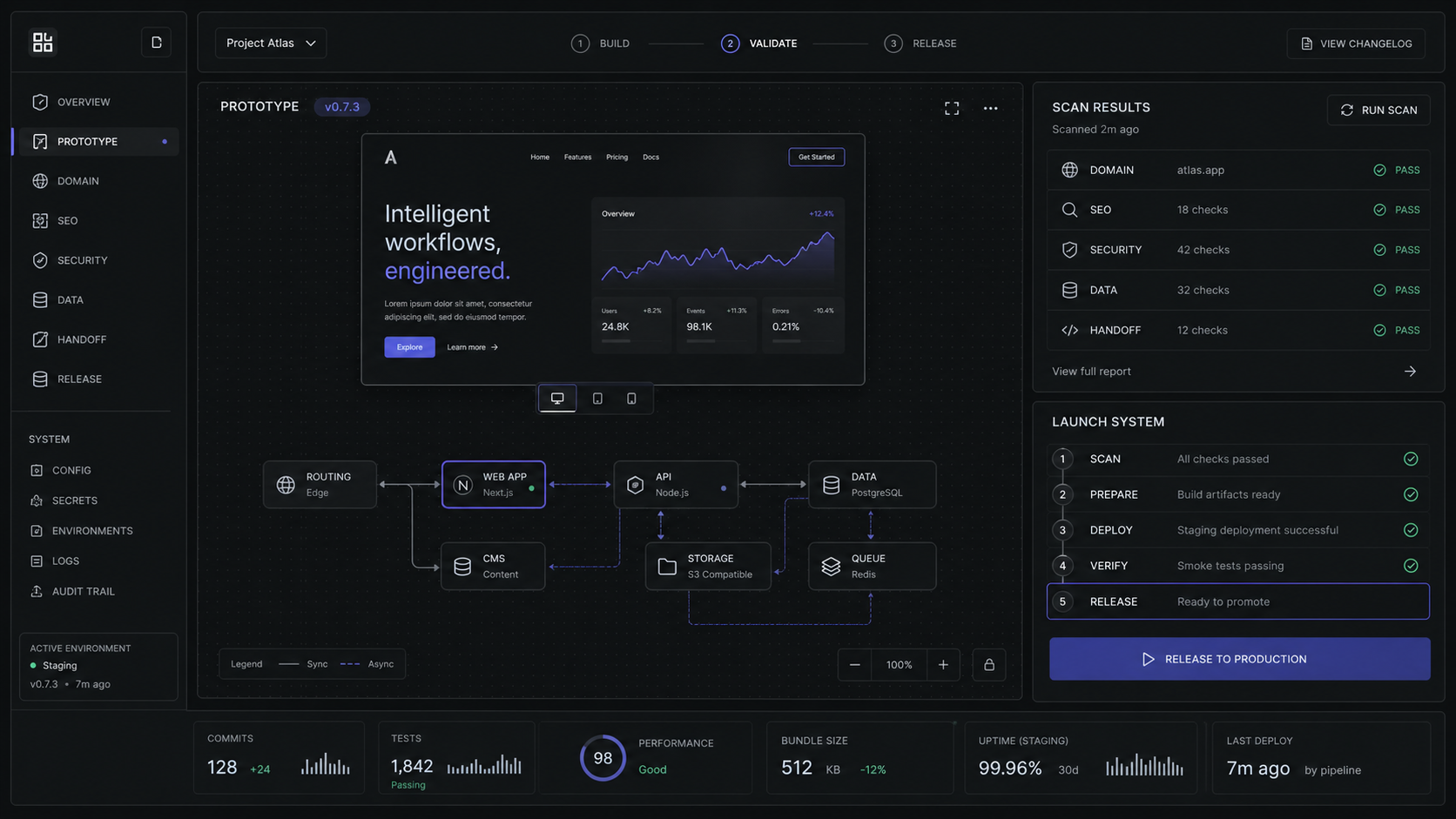
A SaaS website design agency should be accountable for launch conditions, not only finished screens. If performance, analytics, QA, and handoff are missing from the proposal, the founder is buying a presentation file and hoping the launch work appears later.
Use Core Web Vitals as the performance baseline. Web.dev defines Core Web Vitals as the subset of Web Vitals that apply to all pages and are surfaced across Google tools. Its current good thresholds are Largest Contentful Paint within 2.5 seconds, Interaction to Next Paint at 200 milliseconds or less, and Cumulative Layout Shift at 0.1 or less. Web.dev also recommends measuring those thresholds at the 75th percentile of page loads across mobile and desktop.
That does not mean every launch site needs a performance engineering sprint. It means the agency should know what it is targeting before it fills the page with video, scroll effects, and third-party scripts. A visually strong site that loads slowly on a prospect's phone is not a launch asset.
Write the conversion path
Name the primary action for each page before design starts: request demo, start trial, join waitlist, book call, view pricing, or send a technical buyer to docs. Every section should move that action forward or answer an objection that blocks it.
Define the CMS model
List the content types marketing will actually maintain after launch: changelog, resources, use cases, comparison pages, customer stories, docs links, or pricing FAQs. If nobody will own a content type in the first month, it probably does not belong in v1.
Set the measurement plan
Track the events that tell you whether the site is working: pricing views, demo starts, demo submissions, signup clicks, use-case views, docs clicks, and qualified form submissions. The event names should be written before implementation, not invented after launch.
Make handoff a deliverable
Require admin access, platform ownership, design files, CMS schema, component notes, analytics access, redirect list, launch checklist, and a short walkthrough. The site is not handed off if the founder cannot change copy, publish content, and see conversions without chasing the agency.
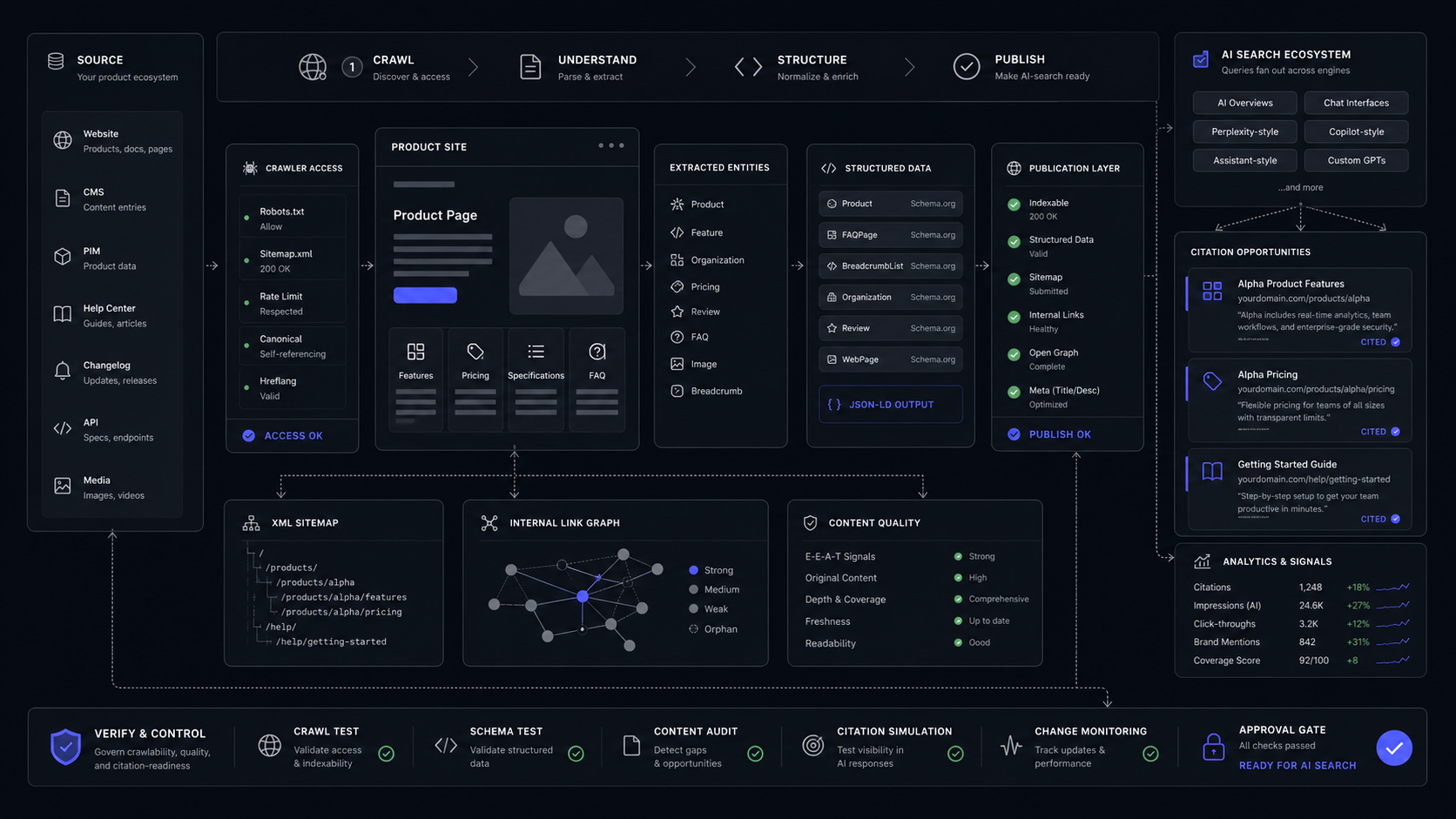
For AI-search visibility, the same principle applies. Do not buy a vague "GEO package" as a bolt-on. Build the site so important claims, use cases, pricing logic, FAQs, and proof are crawlable and citable. The structure in AI-search-ready product sites is the right companion to this scope.
What to cut from the first version
The first version should cut anything that does not change the first buyer conversation. Most launch sites can defer the blog archive, a full comparison hub, partner pages, localization, a custom ROI calculator, deep animation systems, and secondary persona pages.
Those features can be valid later. They are expensive distractions before the product narrative is proven. A calculator is useful when pricing logic is stable and buyers already trust the inputs. Localization is useful when a real sales motion needs it. A content hub is useful when the team has a publishing cadence. Heavy motion is useful when it clarifies a product concept, not when it hides weak copy.
The cut list should appear in the proposal. Fixed scope only works when exclusions are visible. If every idea is "included," the real scope is still unresolved.
The proposal checklist
A strong SaaS website design agency proposal should make the launch measurable before the first design review. It should also make ownership boring. You want clear access, clear files, clear events, clear publishing rights, and clear exclusions.
Use this checklist before signing:
- Audience and offer: who the site is for, what decision it supports, and what the primary CTA is.
- Page map: each page, its job, its primary CTA, and the content needed to build it.
- Copy ownership: who writes source copy, who edits it, and how technical claims are approved.
- Platform decision: Framer, Webflow, custom code, or another stack, with a reason tied to CMS, performance, ownership, and launch speed.
- Conversion events: the actions that will be tracked and where they will be visible after launch.
- Performance target: Core Web Vitals target, image/video rules, script budget, and mobile QA.
- CMS and components: content types, reusable sections, editable fields, and what the marketing team can safely change.
- Handoff: platform workspace, design files, source access where relevant, credentials transfer, analytics access, redirect list, and walkthrough.
- Exclusions: pages, features, integrations, animations, languages, and post-launch support that are not included.
If the proposal cannot answer those points, it is too early to compare price. A lower quote with no handoff, no analytics, and no performance acceptance criteria is not cheaper. It is deferred cleanup.
What makes a SaaS website different from a normal business website?
A SaaS website has to sell a product workflow, not just a company. It needs a conversion path for demo, trial, signup, or contact, plus enough product detail, proof, and pricing logic for a buyer to keep evaluating without a sales call.
How much does a SaaS website design agency cost?
Use current agency pricing as a sanity check, then scope the work. Dribbble's 2026 pricing guide puts small agency websites at $10,000 to $20,000, mid-size websites at $25,000 to $50,000, and complex sites at $60,000 to $150,000+.
Should a SaaS launch site be built in Framer, Webflow, or custom code?
Use Framer when speed and polished launch pages matter most. Use Webflow when marketing needs a CMS-led publishing system. Use custom code when the site needs app logic, product data, account states, or infrastructure that a marketing platform should not own.
How many pages does a SaaS launch site need?
Most funded v1 launches should start with five surfaces: homepage, product or use-case page, pricing or packaging page, proof surface, and conversion handoff. Add pages only when a real buyer objection or sales motion needs them.
What should I own after the agency hands off the site?
You should own the domain, platform workspace or source access, design files, CMS schema, component notes, analytics setup, conversion events, access list, redirect list, and launch checklist. If the agency controls the keys, the site is not truly handed off.
Scope Your Launch Site
Turn your SaaS launch site into a fixed-scope build with conversion pages, CMS, analytics, performance targets, and handoff.
Jul 3, 2026