How Much Does Branding Cost in 2026? A Startup Budget by Buying Path
Compare current branding prices, deliverables, ownership, and the scope a funded startup should buy before launch.

A funded startup should buy a working brand system, not a standalone logo and not an enterprise rebrand. The number only becomes useful after you choose the buying path: $96/yr buys an automated brand kit, US$599 starts a marketplace identity pack, DVNC's fixed-scope identity starts at $6K, and most agency projects reviewed on Clutch land between $10,000 and $49,999.
The short answer: buy the risk you need removed
Branding cost follows the decision you are asking someone to make. An automated kit generates usable assets. A marketplace gives you access to designers. A specialist studio turns positioning into a launch system. A broad agency aligns a more complex organization, portfolio, or rollout.
Those are different purchases, even when every proposal uses the word "branding."
Clutch's July 2026 pricing data also puts the average branding agency rate at $100 to $149/hour. That rate can be rational when research, interviews, naming, governance, and rollout are the work. It is needless overhead when a founder needs a tight identity for a focused launch.

The cheapest paths are useful when the brief is already small
Low-cost branding is a good buy when the business risk is still the offer, not the identity. Use it to make a test legible. Do not ask it to settle positioning, voice, differentiation, and rollout at the same time.
Looka is a kit for testing, not a positioning engagement
Looka is the sensible low-cost choice when you need coherent files quickly and already accept that the output is generated from a system. Looka's live pricing lists a $20 Basic Logo Package with one low-resolution PNG, a $65 Premium Logo Package with high-resolution PNG, EPS, SVG, and PDF files, and the $96/yr Brand Kit.
The Brand Kit is materially more useful than the basic logo because it includes editable logo changes, vector files, guidelines, and 300+ ready-to-use branded assets. Looka also states an important ownership boundary: you own the logo as a whole, but not individual elements such as symbols.
Illustrative fit: a founder is testing demand for a new workflow product with a private waitlist. The offer, audience, and name may still change. A polished kit is enough to keep the test credible without pretending the identity is permanent.
Wrong fit: the same founder has funding, a public launch date, a sales deck, a product interface, and several people creating customer-facing work. The problem is now consistency and decision quality, not access to files.

99designs is a visual execution market, not automatic strategy
99designs works when you can write a strong brief and judge the result. Its logo and brand identity pack starts at US$599 and lists a custom logo, a stationery set containing a business card, letterhead and envelope, a Facebook cover, editable digital and print-ready files, and full copyright ownership.
The direct-hire route is estimated at US$599 to US$2,199. The useful distinction is not contest versus direct hire. It is whether the buyer has already settled the product position, audience, voice, and launch surfaces. If those decisions are open, more visual concepts can multiply uncertainty instead of removing it.
Illustrative fit: a founder has a validated name, a concise positioning statement, examples of the desired tone, and a narrow deliverable list. The job is to commission original visual execution and receive production-ready files.
Wrong fit: the founder is using logo preference as a proxy for unresolved strategy. A marketplace can execute a brief, but the published pack does not list positioning, voice, messaging, product tokens, or a launch deck template.

A funded launch usually needs the specialist-studio scope
The startup default is a fixed project that connects strategy, identity, and launch applications. It costs more than a logo pack because the output is a reusable decision system, not just a mark.
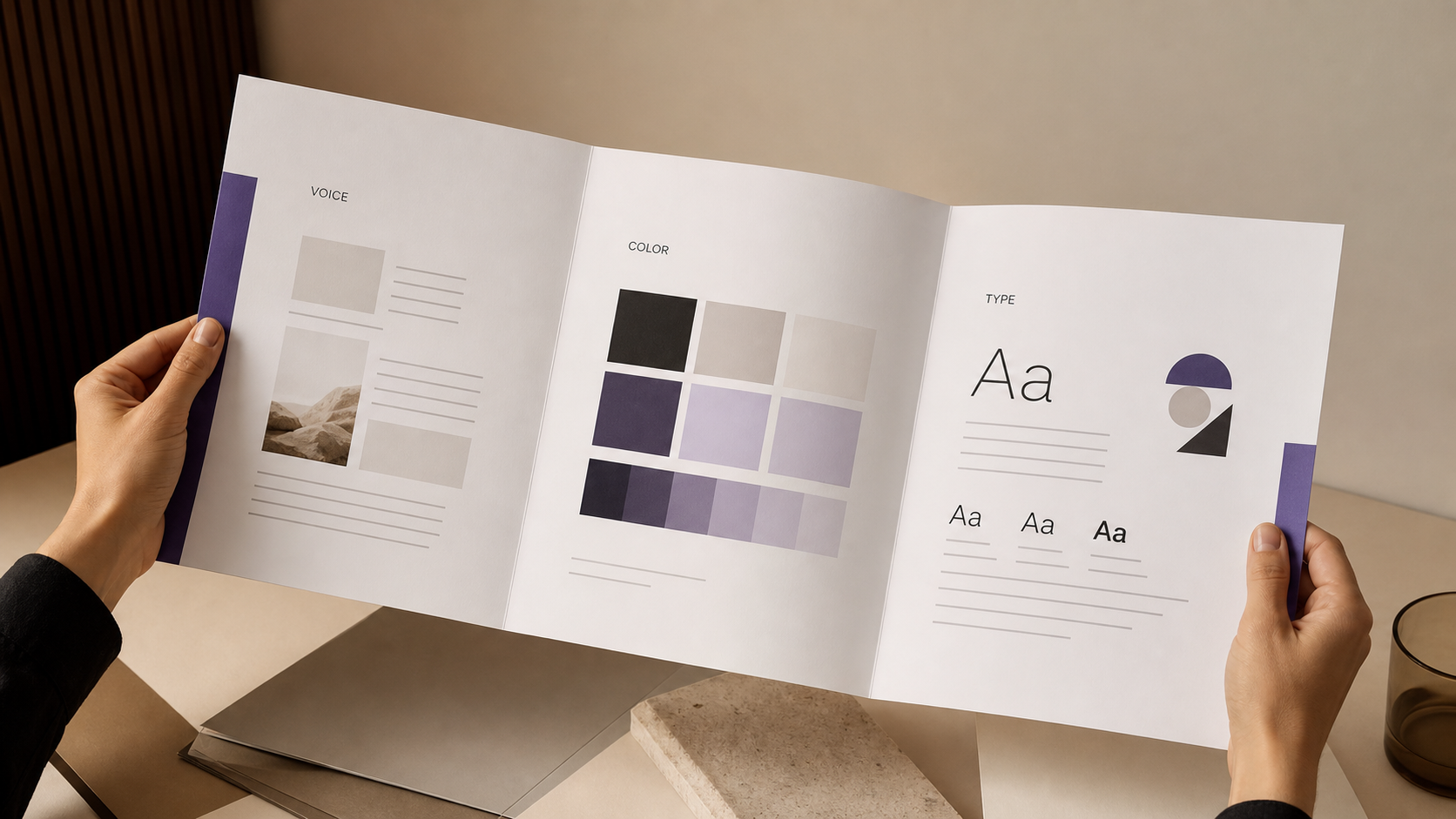
DVNC's published Brand Identity Design engagement starts at $6K and runs for 2 to 3 weeks. The scope includes a strategy workshop covering positioning, audience, and voice; a logo suite with usage rules; a color, type, and component system with design tokens; a voice and messaging guide; a launch kit with a pitch-deck template, social templates, and OG images; and a brand guide with full Figma source files owned from day one.
That is the right level for a funded B2B SaaS founder whose brand must work in a sales conversation, on a launch site, inside a deck, and across the product shell. The engagement is still bounded. It does not need months of corporate research or every conceivable piece of collateral.
The identity should be scoped alongside the SaaS launch-site requirements. Otherwise the logo may arrive polished while the site, deck, product, and social launch each invent a different system.

Cut applications before you cut the system
Reduce the first branding budget by shrinking rollout volume, not by removing the rules that make the identity usable. A founder rarely needs every social template, a merchandise family, extensive stationery, packaging, motion studies, and a brand portal before launch.
Keep the parts that make future work coherent:
- Positioning and audience: the decision that tells the designer what the brand must communicate.
- Logo suite and usage rules: the primary mark, useful lockups, and boundaries that prevent improvised variants.
- Color, type, and interface tokens: the bridge from brand presentation to site and product execution.
- Voice and core messaging: the language that keeps a deck, landing page, and sales story aligned.
- Launch applications: the assets that will actually be used at launch, not a speculative library.
- Owned source files: the editable handoff that keeps the company independent of the original provider.
Cut the rest until a real channel creates the requirement. A physical-product company may need packaging now. A SaaS company probably needs the deck, site, OG image, and product tokens first. Scope follows the launch surface, not a generic package menu.
Scope the engagement before you compare prices
Two proposals are comparable only when they solve the same problem. Normalize the scope first, then judge the fee.
Write the launch decision
State what the audience must understand or feel after encountering the company. "Make it premium" is a taste request. "Make security leaders understand that setup is controlled without making the product feel slow" is a design decision.
Name the real surfaces
List the launch site, product shell, deck, social announcement, email, or packaging that will actually ship. Each required surface should either be designed or governed by a clear rule.
Lock the approval path
Name the decision owner, the feedback contributors, the revision process, and what counts as acceptance. Unbounded feedback is a schedule problem disguised as collaboration.
Specify the handoff
Require editable source files, export formats, font and asset license notes, usage guidance, and clear ownership language. A PDF mood board is not an operating system for the brand.
Use the same checklist against every proposal:
The US$599 marketplace pack and the $6K specialist engagement are not competing quotes for the same scope. The first is a defined visual pack. The second includes positioning, messaging, product-ready tokens, launch applications, and an owned system. Pay for the second only when those decisions are live, but do not pretend the first includes them.
Monthly branding is usually the wrong starting model
Buy the identity as a project when the desired outcome is a defined system. Use a monthly design service after that system exists and the company has a recurring queue of campaigns, pages, decks, product screens, or social work.
Clutch lists branding packages from around $1,000 per month to about $15,000 per month. That spread is not useful without throughput, seniority, active-work limits, and an explicit output list. A monthly fee can be efficient for ongoing production, but it can also hide an identity project that never reaches a clean acceptance point.
Decision rule: if you can describe a finished handoff, buy a project. If the queue continues indefinitely, price a subscription or retainer after the identity rules are stable.
Use the cheapest path that resolves the real risk
The correct budget is the lowest one that removes the launch risk you actually have.
- Use an automated kit when the audience, offer, or name may still change and visual consistency is enough.
- Use a designer marketplace when the strategic brief is settled and the remaining job is original visual execution.
- Use a fixed-scope identity studio when a funded launch needs positioning, a coherent system, real applications, and owned files.
- Use a broad branding agency when research, naming, architecture, stakeholder alignment, or rollout complexity is the assignment.
Do not move up because a larger provider feels safer. Move up because the problem contains more decisions. Do not move down because the logo looks simple. Move down only when the launch does not yet depend on a durable system.
Branding is worth it when the system will be reused
Branding earns its budget when the same decisions carry across the site, product, deck, sales material, hiring, and launch. Reuse is the return: the team stops reopening the same visual and verbal decisions every time it ships.
It is premature when the company cannot yet name the audience, the offer is still changing, or there is no public launch surface. In that case, use the low-cost path and keep learning. Design cannot compensate for missing demand.
It is urgent when inconsistency is slowing real work: the deck tells a different story from the site, the product has no usable tokens, every social asset starts from scratch, or a funding process exposes a brand that no longer matches the company. That is the point to buy the system, not another isolated logo variation.
Is $500 too much for a logo design?
Not by itself. A fee near that level may be reasonable for original visual execution, but it is not a useful proxy for a complete brand. Check whether the scope includes editable source files, rights, useful variants, and the applications you need. If you also need positioning, voice, and a launch system, you are buying a different engagement.
Is branding worth it?
Yes, when the identity will be reused across a real launch, product, deck, and sales motion. No, when the offer and audience are still untested. Fund the system when repeated decisions are becoming a delivery cost.
Can ChatGPT design a logo?
Treat any AI-generated logo as a concept, not a finished identity. A launch-ready result still needs an original, usable mark, production files, usage rules, licensing checks, application tests, and a clear connection to the company's position.
How much does branding cost per month?
Clutch lists packages from around $1,000 per month to about $15,000 per month, but a startup identity is usually cleaner as a fixed project with a defined handoff. Monthly design makes more sense for an ongoing production queue after the identity exists.
How much does a branding agency cost?
Most branding projects reviewed on Clutch fall between $10,000 and $49,999, with an average agency rate of $100 to $149/hour. A focused startup identity can sit below that range when stakeholder alignment, naming, research, and broad rollout are not part of the job.
Scope Your Brand
Get a fixed-price identity system for your launch: strategy, logo suite, voice, launch assets, and full source-file ownership.
Jul 14, 2026