SaaS Spend Management Software: Buy a Tool or Audit First?
Buy a SaaS spend platform when renewals and usage data have owners. Audit first when AI tools, unused seats, and shadow spend are still undefined.

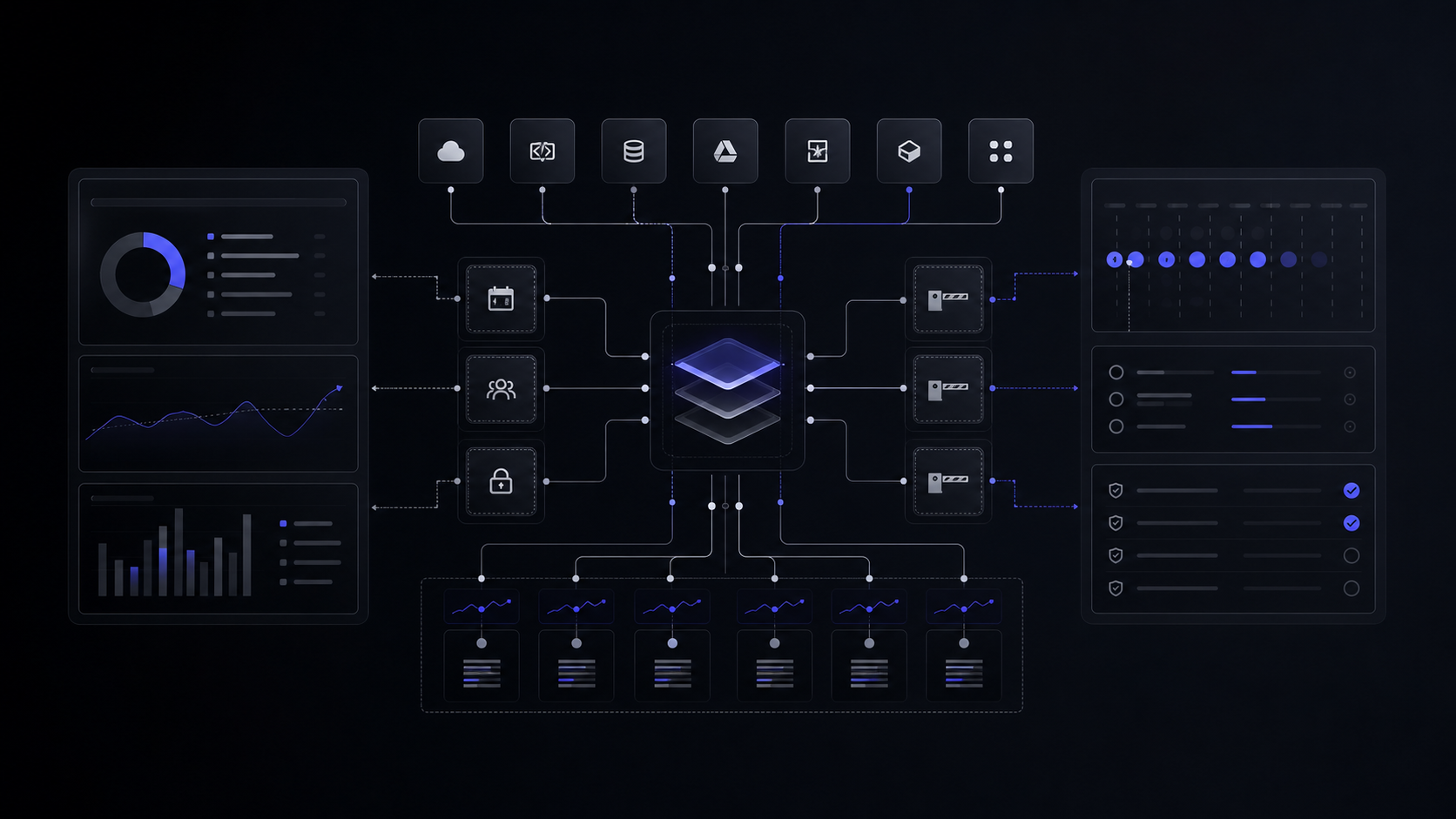
Buy SaaS spend management software when renewals, ownership, and usage data already have a team around them. If your AI tools, unused seats, and shadow subscriptions are still scattered across cards, inboxes, and individual departments, run a focused stack audit first, then decide what software is worth buying.
The Short Verdict
SaaS spend management software is worth buying when software control is already a recurring operating problem, not when the first problem is simply "we do not know what we have." A platform can help your finance, IT, procurement, and security teams maintain one system of record for apps, owners, renewals, contracts, license usage, and savings actions. It will not fix missing ownership by itself.
The business case is real. Zylo's 2026 SaaS Management Index says its benchmark is based on 40M+ SaaS licenses, $75B+ in SaaS and Cloud spend, and 9 years of spend, license, and usage data. In that dataset, organizations average $55.7M in annual SaaS spend and 305 applications. BetterCloud's 2025 State of SaaS report gives a smaller but still heavy benchmark: 106 SaaS tools on average, down from 112 the prior year.
Those two numbers are not a contradiction. They describe different slices of the market. The practical point is simpler: even a "consolidated" stack can still be too large for spreadsheet governance.
What SaaS Spend Management Software Actually Does
The useful version of SaaS spend management combines discovery, usage, contracts, renewals, ownership, and action. "SaaS management" means more than a vendor list. The value is knowing which tools exist, who owns them, who uses them, when they renew, what data they touch, and what decision should happen next.
The strongest platforms tend to cluster around a few jobs:


The tool choice should follow the control gap. If the main problem is negotiation leverage, Vertice-style support is a different buy from an identity-governance platform. If the main problem is unused seats and deprovisioning, 1Password SaaS Manager or Torii may be closer to the job. If AI feature charges are changing the spend model mid-contract, you need usage visibility and value tracking, not only a renewal calendar.
The Pricing Signal: This Is Usually A Procurement Buy
Most serious SaaS spend platforms are not priced like simple team subscriptions. The public pages scraped for this run mostly route buyers to "Book a Demo," "Request a demo," or "Get A Custom Quote." Torii is explicit: both its IGA and SMP plans are custom quote. Zylo, Vertice, CloudEagle, and 1Password SaaS Manager all route the buyer to a demo path on their current pages.
That matters because the evaluation is not just "which tool is cheapest?" It is "which operating cost can this remove or control?"
If you are buying one of these platforms, ask for the pricing basis before the demo turns into a feature tour:
Ask what drives the quote
Confirm whether price changes by employee count, managed apps, annual software spend, modules, integrations, professional services, or savings-share terms.
Ask what data the platform needs
List the required feeds: finance exports, expense data, contracts, SSO, HRIS, procurement tools, identity providers, and app usage sources.
Ask what action it can take
Separate visibility from control. A dashboard that shows unused seats is useful. A workflow that reclaims seats with approvals, logs, and exception handling is more valuable.
Ask how savings are proven
Savings should tie back to a contract, seat reclaim, downgrade, cancellation, avoided renewal, or negotiated term. If the report cannot show the action behind the number, it is not finance-grade evidence.
The right platform can pay for itself. The wrong one becomes a second system of record beside the spreadsheet it was meant to replace.
Audit First When The Problem Is Still Undefined
A stack audit is the safer first move when your software inventory is incomplete, your app owners are unclear, or AI charges are appearing inside tools you already bought. The audit does not need to be theatrical. It needs to produce a decision table your CFO, operator, and security owner can act on.
Use a 90-day expense and AP export, then join it to SSO or identity-provider app lists. Tag each tool with owner, renewal date, users, business outcome, data risk, and AI or usage-based charges. Then review the next 10 renewals by annualized spend and operational risk.
The output should look like this:
This is where AI-heavy stacks fail quietly. Zylo's 2026 index says AI-native app spend jumped 108%, large enterprises saw 393% growth in AI-native app spend, and 78% of IT leaders reported unexpected charges tied to AI features or consumption-based pricing. That is not a renewal-calendar problem alone. It is a value-control problem.
Buy A Platform When The Work Is Continuous
A SaaS spend platform is the right buy when the same work keeps coming back every month: new apps, shadow AI, license waste, access drift, renewal deadlines, contract changes, and finance questions about whether savings are real.
Buy when these conditions are true:
- Finance needs recurring showback, forecast, or vendor-spend reporting.
- IT or security needs app discovery, access visibility, and offboarding confidence.
- Procurement needs renewal calendars, pricing benchmarks, contract context, and negotiation support.
- Operators need workflows that assign owners, collect approvals, reclaim seats, and leave evidence.
- AI and usage-based pricing need caps, alerts, and outcome logs.
BetterCloud's 2025 State of SaaS report says each IT professional now serves 108 employees, a 31.4% increase, and 48% of IT worries about missing key offboarding steps. That workload is why a platform can make sense. It turns scattered reminders into a managed lifecycle.
The mistake is buying before the organization is ready to operate it. A platform needs owners for data intake, renewal decisions, savings validation, and exception handling. Without those roles, the tool will find issues faster than the team can close them.
For a funded SaaS company, the first useful platform workflow is usually not "manage every app." It is a narrower control loop:
Start with the next renewal wave
Load the next renewals, contract dates, owners, current seats, active users, and finance owner. If the system cannot improve renewal decisions, the rest of the inventory will not matter yet.
Attach usage to a decision
For each renewal, require one action: renew as-is, reduce seats, downgrade, consolidate, renegotiate, or cancel. Usage without a decision is trivia.
Log savings as evidence
Record the action, amount, contract, approver, and date. Savings that cannot be audited will not survive budget review.
Add intake rules
Every new AI tool or SaaS subscription needs an owner, outcome, data-risk tag, and renewal date before it is approved.
If you only need the renewal workflow, a targeted automation may beat a full platform. The same task math applies to broader workflow choices, which is why the Zapier pricing task math and n8n vs Zapier vs Make decisions matter here too. Use automation for bounded control loops. Use a spend platform when the whole stack needs a durable operating layer.
AI Tool Spend Changes The Decision
AI turns SaaS spend management from renewal hygiene into value governance. A standard seat license is easier to reason about: user count, tier, renewal date, owner. AI pricing often adds usage, credits, add-ons, premium tiers, or embedded features inside products the team already uses.
Gartner predicted that over 40% of agentic AI projects will be canceled by the end of 2027 because of escalating costs, unclear business value, or inadequate risk controls. The same warning applies to AI SaaS spend. If a tool charges more as usage grows, the approval question cannot stop at "who owns the renewal?" It has to ask what outcome the usage produced.
The control model should be simple:
- Every AI tool has an owner.
- Every owner names the workflow the tool improves.
- Usage-based charges are reviewed against outcome, not activity.
- Risky workflows get human approval before external actions, customer messages, or sensitive-data movement.
- Renewals include a value log, a cost trend, and a cancel-or-keep decision.
This is where the audit-first route earns its place. Before you buy a platform, you may need to define the value ledger: what counts as a completed support resolution, a qualified lead, an approved finance task, a generated report, or a recovered seat. Spend software can track the portfolio. It cannot decide what business value means for your workflows.
The Decision Rule Before You Buy
Choose SaaS spend management software when the work is continuous and cross-functional. Choose an audit when the truth is still missing. Choose targeted automation when one bounded control loop keeps failing.
Here is the practical rule:
The buyer mistake is treating SaaS spend management software as the start of control. It should be the place control lives after the operating rules are clear. If the stack is messy, audit first. If one workflow breaks, automate that workflow. If the whole company needs a shared operating layer for apps, renewals, access, and AI spend, then buy the platform with a clear owner and a measurable savings model.
What is SaaS spend management software?
SaaS spend management software discovers SaaS apps, tracks spend and usage, manages renewals, and helps teams reclaim unused seats or consolidate overlapping tools. The strongest platforms connect finance, procurement, IT, and security data instead of only listing subscriptions.
What is the best SaaS spend management software for a growing company?
The best choice depends on the control gap. Pick Vertice-style support when procurement leverage is the issue, Torii or CloudEagle when identity and access governance matter, 1Password SaaS Manager when usage and license workflows are central, and Zylo when enterprise software and AI spend visibility is the bigger operating problem.
Is SaaS spend management software worth it for a small team?
Usually not before a stack audit. A smaller team should first prove repeated renewal waste, unknown ownership, unused seats, or enough app volume to justify platform overhead.
Can workflow automation replace SaaS spend management software?
Workflow automation can replace one bounded renewal, approval, or seat-reclaim process. It cannot replace app discovery, benchmarking, identity visibility, contract history, and recurring finance reporting across the whole stack.
How is SaaS spend management different from FinOps?
FinOps usually focuses on cloud infrastructure and usage economics. SaaS spend management focuses on applications, contracts, owners, seats, renewals, access, and usage-based software charges. AI pricing is making those two disciplines overlap more often.
Audit Your AI Stack
Map your AI and SaaS tools, find duplicate spend, define approval rules, and decide what to cancel, automate, or keep.
Jun 3, 2026